After the Applause: What Comes Next Matters Most
There is a particular kind of silence that comes after something wonderful. It is not the silence of disappointment or regret, but the quieter space that appears once the congratulations begin to fade and the moment you worked toward becomes part of yesterday. For weeks, I had been preparing to speak on a larger stage in London. There were flights to arrange, words to shape, ideas to refine, clothes to pack, nerves to manage, and that familiar mixture of excitement and uncertainty that accompanies anything important enough to stretch us. Then the day came. I stood on the stage, delivered the message I had traveled across an ocean to give, looked out into a room filled with women from many places and backgrounds, and experienced one of those moments that becomes permanently stitched into the fabric of a life.
Then I came home.
That sentence may sound simple, but coming home after a significant experience is rarely as simple as returning to the place where you live. There is the physical return, certainly, but there is also an internal return that takes much longer. You unpack the suitcase, put the shoes back in the closet, answer the waiting emails, run the errands, and return to the routines that were carrying on perfectly well without you. The world has a way of returning to ordinary very quickly, even when something extraordinary has happened inside you.
For much of my life, I thought finishing well meant reaching the goal with excellence. I believed it meant doing what you said you would do, keeping your word, preparing thoroughly, showing up fully, and walking away knowing that you had given the opportunity your best. I still believe all of those things matter, but age has taught me that finishing well has another dimension. Sometimes the true measure of an accomplishment is not what happened while the lights were shining on us, but what we choose to do once the lights have gone down.
The applause is not the finish line.
The larger question is what the experience has prepared us to become.
This is especially important during the Encore Years, when many women have already completed some of the achievements that once seemed enormous. Careers have been built. Children have grown. Degrees have been earned. Businesses have been launched and sometimes sold. Leadership roles have been filled, organizations have been changed, houses have been turned into homes, and difficult seasons have been survived. By the time we arrive in this chapter of life, we do not need additional proof that we are capable women. We have the scars, accomplishments, photographs, diplomas, stories, and hard-earned wisdom to prove it.
What we need is clarity about what all that capability is for now.
There is a temptation after a major accomplishment to spend too much time trying to recreate the feeling of the accomplishment itself. We can become attached to the room where people applauded us, the title that once opened doors, the position that made others listen, or the success that became part of the way we described ourselves. It is understandable. Human beings like milestones because milestones are easy to see. They give us something concrete to point toward and say, “There. I did that.”
Legacy is more difficult to measure.
Legacy often grows quietly, in places without applause. It develops in the conversation you finally have with your adult child, the woman you encourage when she is doubting herself, the granddaughter who hears a story she would never have known if you had not decided to tell it, the wisdom you document before memory begins to soften its edges, or the family pattern you refuse to pass forward simply because it was passed to you.
When I think about what came after London, I do not find myself asking how I can make the next stage bigger. I find myself asking how I can make the next season matter more. Those are very different questions. Bigger is about scale. More meaningful is about stewardship.
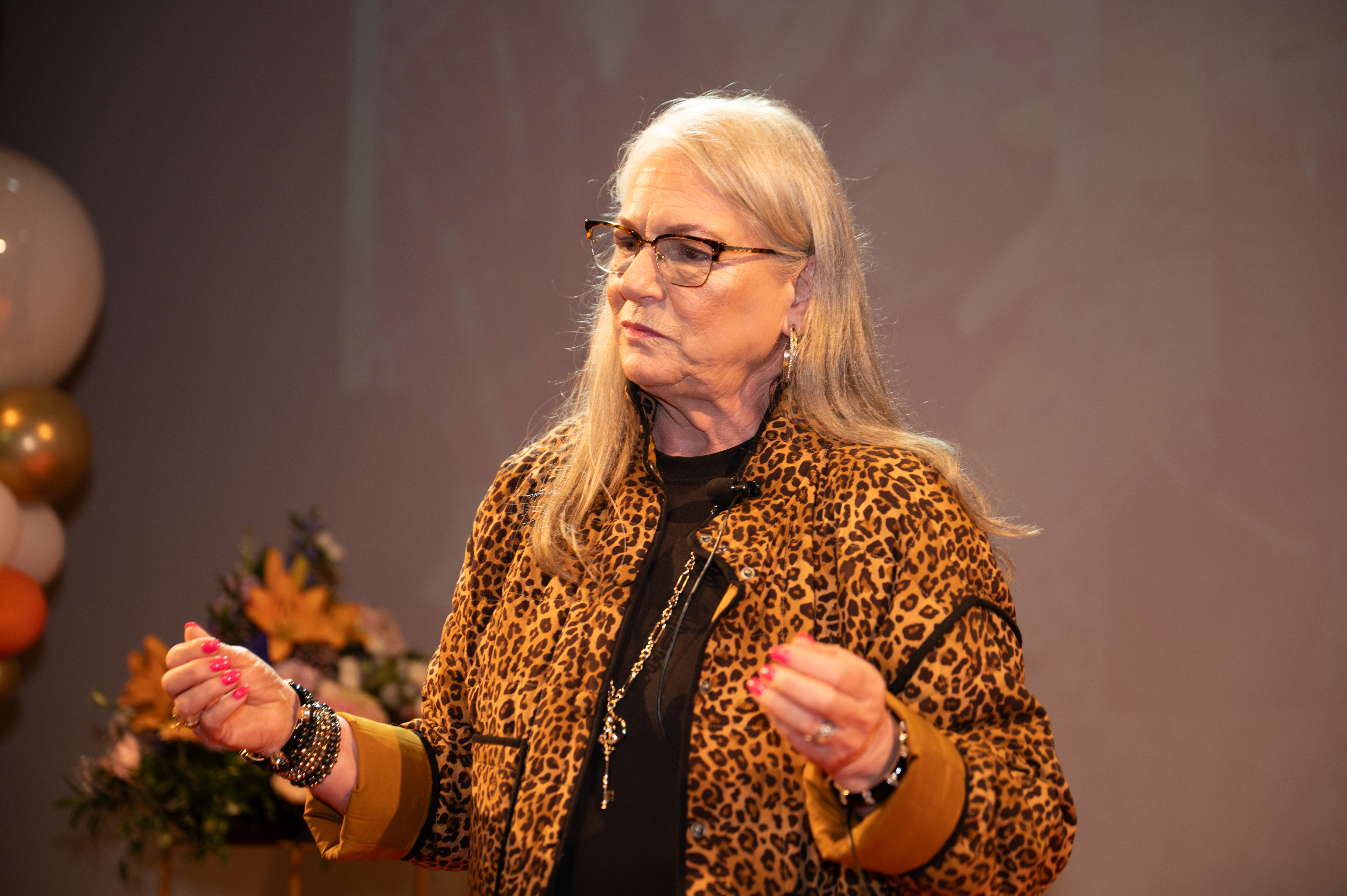
London reminded me that opportunities are not simply rewards for the work we have already done. Sometimes they are assignments for the work that is still waiting. A stage can give a woman visibility, but visibility creates responsibility. Once you have been given the chance to speak, teach, lead, publish, mentor, influence, or serve, the question becomes whether you will use that opportunity to build something that extends beyond your own moment.
This is one of the reasons I believe women in their later chapters need a broader definition of success. For decades, many of us measured progress through visible markers: titles, salaries, promotions, degrees, professional recognition, clients, projects, and the size of our responsibilities. Those measurements served a purpose, but they are not always sufficient for the life we are living now.
Perhaps the better questions have become these: Who is stronger because I was willing to share what I know? What family conversation happened because I had the courage to begin it? What wisdom will remain available after I am no longer here to explain it? What did I repair? What did I bless? What did I teach? What did I make easier for the woman coming behind me?
These are finishing-well questions because they move us from achievement to significance.
I have reached a place in my life where I am less interested in collecting moments and more interested in understanding what each moment is asking of me. London was beautiful. It was important. It was an answer to prayers, work, preparation, and willingness. I will always treasure the memory of standing there and speaking from a bigger stage.
But I do not want to spend the next ten years telling the same story about what happened in one room on one day.
I want that experience to create more courage, deeper work, stronger conversations, greater service, and a clearer commitment to helping women live, love, and eventually leave this world with fewer regrets. I want the stage to matter because of what followed it.
That is the part of finishing well we rarely discuss. Every ending is quietly asking us what we will carry into the next beginning.
Perhaps you are experiencing your own version of this right now. You may have retired, completed a major project, published something, received recognition, watched your youngest child leave home, sold the business, moved away from a long-held role, or finally achieved the goal that once occupied your thoughts for years. The celebration may have been deserved, but now you find yourself in the quieter space afterward.
Do not mistake that quiet for emptiness.
It may be invitation.
The moment after the applause is often when we finally have enough stillness to hear the deeper question beneath the achievement. We begin to understand that the goal was not simply to arrive. The goal was to become the kind of person capable of carrying something worthwhile forward.
That is why what comes next matters so much.
Finishing well does not mean hanging onto yesterday long enough to prove that it mattered. It means taking everything yesterday taught you and using it to live today with greater wisdom, intention, courage, and generosity.
I came home from London grateful for the stage, but more grateful for the clarity that followed it. I understand more deeply now that I do not need another applause line to know that the work matters. The real evidence will be found in the people, conversations, families, and women who are changed because I chose not merely to enjoy what I was given, but to steward it.
“Applause celebrates what you have done. Legacy reveals what you decided to do with it.”
Perhaps that is one of the great privileges of the Encore Years. We no longer have to chase every opportunity simply because it is available. We can become more discerning. We can ask whether something serves the life we are building, the people we love, the wisdom we carry, and the legacy we hope to leave. We can stop performing significance and begin living it.
The stage eventually empties. The flowers wilt. The photographs move farther down the camera roll. The congratulations become a lovely memory. None of that diminishes the moment. It simply reminds us that a meaningful life was never meant to be built around one moment.
The question that remains is the one I am carrying home with me now: What will I do next with everything this season has taught me?
I hope you will ask yourself the same thing, because sometimes the most important part of a dream begins after you have already lived it.