The First Stage Was the Front Porch
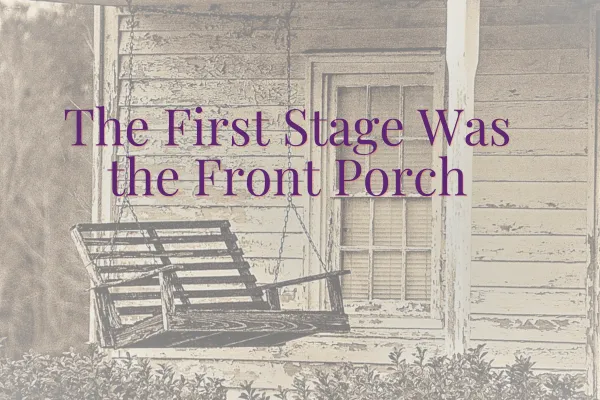
Long before I stood on a stage in London, I stood on the front porch with my brother Dwayne. There were no bright lights, no microphone, and no printed program with our names on it. No one had purchased a ticket to hear us speak. As far as we knew, no one was listening at all, but that never stopped us.
The front porch became our stage, the yard became our auditorium, and the trees, fence posts, and open fields became the audience we were determined to reach. Dwayne and I practiced our speeches out there more times than I could ever count. Whenever one of us had to speak at school, present something in class, or stand before a group, the other became the first person to hear it.
We did not simply read the words to each other. We practiced the whole performance. “Look at me,” one of us would say. “Lift your head. Stop looking at the floor. Stand up straight. Slow down. You are talking too fast.”
Sometimes the correction came with patience. Sometimes it came with the unmistakable honesty that only a brother or sister can deliver. Dwayne never allowed me to believe that knowing the words was enough. I had to make eye contact. I had to hold my shoulders square. I had to speak as though the people sitting beyond the porch truly needed to hear what I had come to say.
Then it would be his turn, and I gave the instructions back to him. “Say that part again. You rushed through it. Do not turn away when you get nervous. Look at your audience.”
We were children, but we were already learning something many adults never fully understand. Speaking is not only about having words. It is about making a connection between your heart and the people listening. Of course, our people were imaginary. At least, we thought they were.
The Audience Beyond the Porch
From the front porch, we could see the familiar world of Frost Lane stretching before us. It was the world we knew best, the place where ordinary life unfolded in every direction. The yard was not an auditorium, but in our minds it could hold hundreds of people.
The trees became the back row. A fence post became the serious man who needed convincing. The open space beyond the house held women in Sunday dresses, teachers with their hands folded in their laps, and community leaders waiting to hear whether we had anything worth saying. We created audiences large enough to frighten us just a little, and that was part of the practice.
It is easy to speak when you imagine no one is listening. It is different when you picture faces turned toward you and trust your words to travel all the way to the last person in the crowd. Dwayne and I wanted our voices to reach them.
“Do you think they heard that?” one of us might ask.
“Not in the back,” the other would answer.
Then we would begin again.
We learned to project without shouting. We learned that eye contact could make an imaginary person feel real. We learned that shoulders held square could convince the body to feel brave even when the heart had not caught up. We practiced until the speech sounded less like something memorized and more like something we believed.
Neither of us had a formal speaking coach. We had each other. Looking back, I am not sure we could have found anyone better.
The Honest Kind of Love
Brothers and sisters are not always known for delicate feedback. Dwayne knew when I was pretending to be more confident than I felt. He could hear the moment my voice changed because I had forgotten the next line. He noticed when I was looking just above his head instead of meeting his eyes. There was no hiding from him, and that was one of the gifts of our relationship.
He knew me before I had titles, degrees, professional accomplishments, or a carefully prepared public voice. He knew the girl underneath all of that. He knew when I was capable of doing better, so he told me. I did the same for him.
There was love in our honesty, although I doubt we would have described it that way then. We were simply trying to help each other avoid embarrassment when the real audience arrived. But love is often hidden inside those ordinary efforts.
Love is there when someone listens to the same speech for the fifth time. It is there when a brother tells his sister to begin again because he knows she can do better. It is there when a sister refuses to offer empty praise and gives him the truth he needs instead.
We did not say, “I believe in the power of your voice.”
We said, “Try it again.”
Sometimes those words mean the same thing.
What We Did Not Know
We could not have known where life would take us. We did not know that I would spend 45 years in education, standing before classrooms, faculty meetings, workshops, conferences, and community groups. I did not know that speaking would become woven through nearly every chapter of my professional life. I could not have imagined that one day I would travel across an ocean and stand before an international audience in London.
Dwayne could not have known that the little sister he coached from the front porch would one day open a speech with the words, “Good afternoon, London, from the hills of Arkansas.” But perhaps those hills had been part of every speech all along.
The place where we practiced shaped the way I learned to speak. I did not learn that a speaker should look down upon an audience. I learned to look people in the eye. I did not learn to hide behind impressive words. I learned to speak clearly enough that the person at the edge of the yard could understand me. I did not learn to perform perfection. I learned to keep going when I forgot a line.
Most importantly, I learned that before a speech belongs to a crowd, it must first be offered to one trusted person.
Dwayne was that person for me. He was my first audience, my first critic, and my first speaking partner. He was one of the first people who taught me that my voice could carry farther than I believed.
No One Was Listening, So We Thought
We assumed no one was paying attention as we stood on that porch giving speeches to the yard. But on a family ranch, very little happens without someone noticing. Perhaps Papa heard us as he moved through his work. Perhaps Grannie listened from inside the house while pretending to be occupied with something else. Perhaps a neighbor passing by wondered why two children were addressing a row of trees with such determination.
I cannot say for certain who heard us, but I know now that someone was always listening. Dwayne was listening to me, and I was listening to him. Perhaps the children we were becoming were listening too.
Every time I straightened my shoulders, I was teaching myself that I could stand before people. Every time Dwayne reminded me to make eye contact, I was learning that speaking requires more than courage. It requires connection. Every time we started again, we were building the discipline that would carry us into rooms we had not yet imagined.
The porch was listening in its own way. It held our nervous beginnings, our laughter, our mistakes, and our determination. It became part of the landscape of my voice. Years later, when I walked onto stages that looked nothing like Frost Lane, some part of me was still standing on those porch boards.
I was still trying to reach the back row.
I was still hearing Dwayne say, “Look at me.”
The Brother I Carried to London
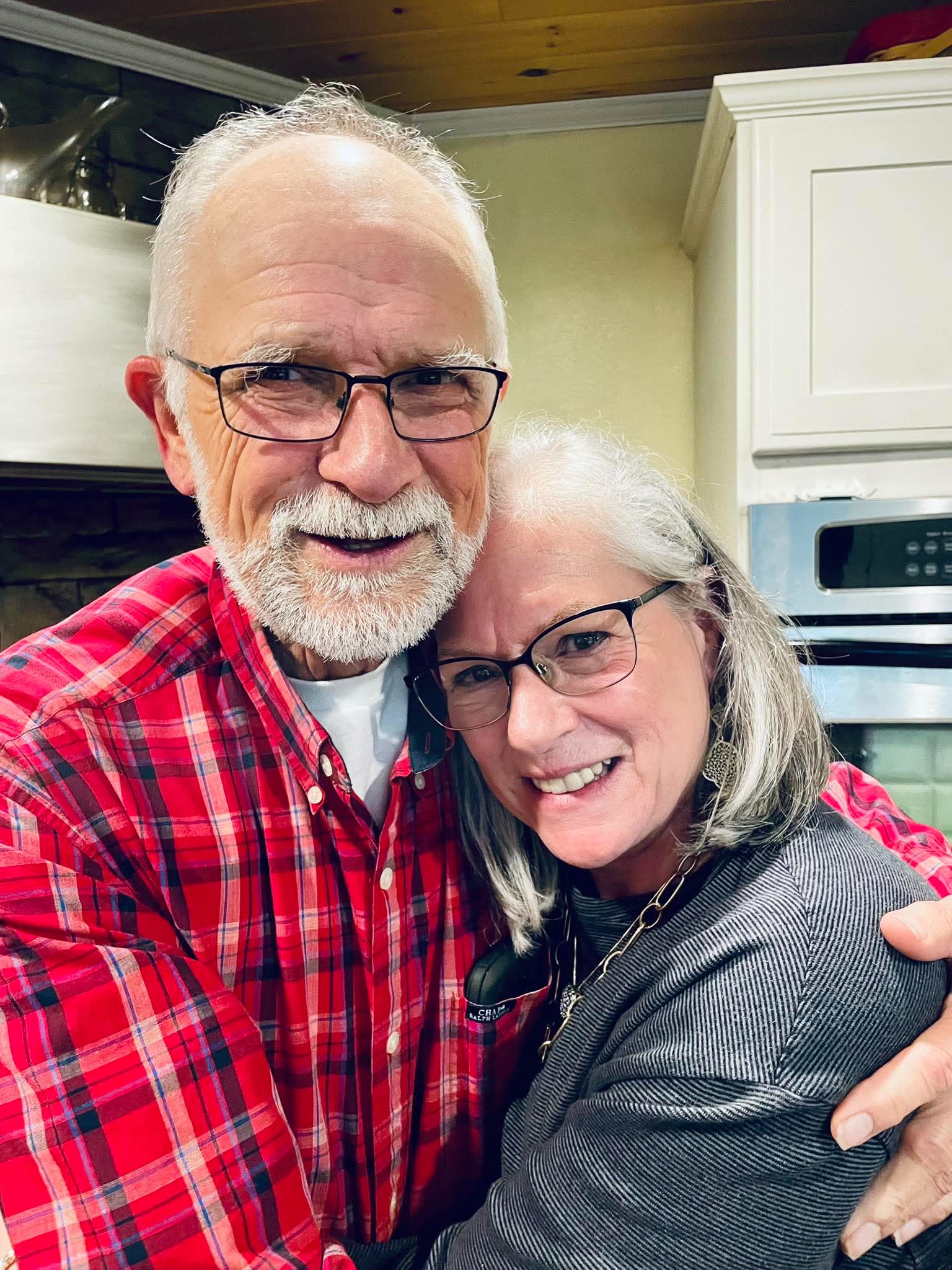
Dwayne did not live to see me stand on the stage in London. Cancer took him before that chapter of my life unfolded, and that truth still carries an ache I cannot fully explain.
There are moments we assume we will share with the people who knew us first. We imagine calling them afterward, telling them what happened, and hearing the pride in their voices. Then life teaches us that some people must be carried into our future in a different way.
When I stood before that audience in London, Dwayne was not sitting in a chair where I could find his face. But he was there.
He was there in the way I lifted my head. He was there in the way I squared my shoulders. He was there when I looked beyond the first row and allowed my eyes to travel across the room. He was there in my determination to reach the woman sitting farthest away.
The audience may have heard one woman speaking, but I knew my voice had been shaped by many people. Grannie had taught me to stand tall and speak kindness with courage. Papa had taught me, through the steadiness of his life, that words should be supported by character. Dwayne had stood on the front porch with me until I learned to look another person in the eye and say what I came to say.
None of them crossed the ocean with me in the way people usually travel. Still, I did not go alone.
The First Stage Matters
We often imagine that a speaking career begins with an important invitation. I no longer believe that. It begins in smaller places.
It begins when a child recites something at the kitchen table. It begins when a teacher asks a student to stand before the class. It begins when a brother listens from the porch steps and says, “Try that part again.”
The first stage may not look impressive, but it gives us something the larger stages cannot. It gives us our beginning. It teaches us how to stand before we have credentials. It teaches us how to speak before we know where our voice may travel. It gives us the people whose belief becomes part of the courage we carry later.
I have spoken in many places since those childhood days. Some audiences have been large. Some have been small. Some were close to home, and one waited for me across an ocean. Yet I have never stood on a stage more important than that front porch.
That was where I first learned that speaking was not about sounding important. It was about reaching someone.
The Voices That Stay With Us
I wish I could stand on that porch with Dwayne one more time. I would give anything to hear him interrupt me and tell me I was rushing. I would gladly begin the entire speech again just to see him watching, listening, and deciding whether I had finally made proper eye contact.
Grief often makes us long for the moments we once considered ordinary. We miss the conversations that had no ceremony around them. We miss the corrections, the teasing, and the familiar voice telling us what we already knew. We miss being known by someone who remembers us before the rest of the world learned our name.
I cannot return to that childhood afternoon, but every time I speak, I carry something from it forward. I look at the people before me. I hold my shoulders square. I imagine the person in the back who may need the message most.
Somewhere inside me, I hear my brother.
“Look at your audience.”
“Slow down.”
“Make sure they can hear you.”
So I do.
Long before London, long before the titles and the photographs, two children stood on the front porch of their family home and practiced speaking to people who were not there. We thought no one was listening.
We were wrong.
We were listening to each other. Sometimes, one person who truly listens is all a voice needs to begin finding its way into the world.

Before the world recognizes our gifts, there is often one person who listens, encourages, corrects, and reminds us that we are capable of more. That person may have been a parent, grandparent, sibling, teacher, friend, or mentor. Their voice becomes part of the courage we carry long after the original moment has passed.
Take a quiet moment to remember the person who first helped you believe that your voice, dream, or gift mattered.
Who was your first audience, and what did that person teach you about using your voice?
My first audience was:
What this person taught me was:
Whose voice can I encourage today so that they, too, will believe they have something worth sharing?
The action I will take is:
