The Women History Almost Forgot: Following Their Footsteps Through Valencia
From the silk workshops of Spain to the kitchen tables of the American South, the wisdom of women has always been woven into the fabric of our lives.
As I prepare for my upcoming journey to Valencia, Spain, I have found myself thinking about something that rarely receives much attention in the colorful travel brochures and beautiful photographs of historic European cities. We are often invited to admire magnificent cathedrals, ancient stone walls, grand marketplaces, and architectural treasures that have survived for hundreds of years. We learn about kings and merchants, military conquests and economic achievements, and the powerful men whose names appear in history books. Yet somewhere behind those impressive monuments were generations of women whose hands prepared the meals, raised the children, tended the gardens, cared for the sick, supported family enterprises, and quietly held entire communities together. Their names may not appear on bronze plaques or in the official records of great institutions, but their contributions are woven into the very foundation of the places we admire today.
I suppose that is one reason I am so fascinated by the women who lived in Valencia centuries before I ever imagined visiting Spain. I am preparing to attend a Women's Retreat for Business Planning and Strategy, surrounded by women who are intentionally shaping their futures. Yet as I think about the opportunities available to us today, I cannot help wondering about the women who came before us. What dreams did they carry while working in their homes or workshops? What wisdom did they share with their daughters? What sacrifices did they make so their families could survive and prosper? And if they could speak to us across the centuries, what would they want us to know about the lives they lived?
Those questions feel especially meaningful to me because I grew up in a family where some of the most important lessons were taught by people who never expected their names to appear in a history book. My grandparents raised me on an Arkansas ranch, where life was measured by the changing seasons, the work that needed doing, and the responsibility we had to one another. I learned about faith, perseverance, generosity, and stewardship long before I understood that those ordinary daily lessons would become the foundation of my work as an educator, mentor, and legacy strategist.
The more I learn about Valencia, the more convinced I become that the women of its past and the women of my own Southern upbringing shared something profoundly important. They understood that much of the work that shapes future generations happens quietly, in places where there are no audiences, no awards, and very little recognition.
The Women Behind Valencia's Magnificent Silk
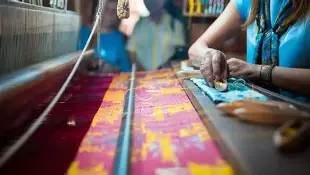
One of the most fascinating chapters of Valencia's history involves its extraordinary silk industry, which flourished for centuries and helped establish the city as a major center of Mediterranean commerce. By the fifteenth century, Valencia had become an important location for silk production and trade, and the industry eventually supported a vast network of growers, craftspeople, merchants, and households. The historic neighborhood known as Velluters, named for its velvet makers, still carries reminders of the weaving traditions that contributed so much to the city's identity.
As I read about this remarkable industry, I find myself especially interested in the people whose labor transformed fragile silk fibers into beautiful textiles. The surviving records tell us about guilds, workshops, markets, and commercial success, but I also wonder about the women whose contributions were made within families and households connected to this complicated trade. The precise responsibilities of individual women varied across periods and circumstances, and not every contribution was recorded. Yet the larger story of textile production reminds us how much economic activity depended on patient, skilled, often uncelebrated work.
I can almost picture a woman living centuries ago, beginning her day before the household was fully awake, attending to her family while also contributing to the work that supported their livelihood. Perhaps she helped prepare materials, managed household responsibilities that made workshop labor possible, or taught a daughter the practical skills required to contribute to the family's future. I do not know her name or the particular circumstances of her life, and I would not pretend that every woman experienced that world in the same way. Still, I find myself wishing that someone had written down her story, including what she hoped for, what she feared, and what she wanted her children to remember.
There is something about the image of silk being woven into fabric that speaks directly to my heart. A single thread may appear delicate, almost insignificant when held between our fingers. But when thousands of threads are brought together through skilled and careful work, they can become something strong, beautiful, and enduring.
Is that not what women have been doing for generations?
We have been weaving families together through shared memories, acts of service, hard conversations, celebrations, sacrifices, and the quiet determination to carry forward what matters. Some of those threads are visible to the world, while others remain hidden within the fabric of our daily lives. Yet each one contributes to the strength of the whole.
I think about the women in my own family who preserved traditions without ever describing themselves as historians. They knew which stories deserved repeating, which recipes could bring a family together, and which lessons needed to be taught before a child stepped into the wider world. Their work was not preserved in a grand museum, but it lives in the way I think, the decisions I make, and the values I hope to pass forward.
That is a kind of inheritance no amount of money can replace.
A Woman Who Refused to Let Her Voice Disappear
Among the historical women connected to Valencia, one name has captured my imagination: Isabel de Villena, who lived from approximately 1430 to 1490. She became an abbess at the Monastery of the Holy Trinity in Valencia and is recognized as a pioneering female writer in the Valencian language. Her most famous work, Vita Christi, retold the life of Christ with remarkable attention to the women of the biblical narrative. The work was published after her death in 1497, allowing her voice to continue reaching readers long after her own lifetime had ended.
I find her story extraordinary, particularly when I consider the limitations placed upon women's education and public expression during the fifteenth century. At a time when women's opportunities to participate in intellectual life were often restricted, Isabel contributed a significant work of religious literature and offered a perspective that emphasized women's dignity and spiritual importance.
As a woman of faith and an educator, I am deeply moved by the thought of someone using the written word to preserve an understanding of life that might otherwise have been overlooked. Isabel did not have the digital platforms, publishing opportunities, or communication tools available to women today. Yet she used the means available to her to leave behind ideas that scholars and readers continue to explore centuries later.
Her example causes me to reflect on the power of a woman's voice and the responsibility that comes with having opportunities to share it. During my decades in education, I encountered countless women who possessed extraordinary knowledge but had become accustomed to allowing other people to speak first. Some had learned to minimize their accomplishments, while others believed their ideas were not important enough to be recorded or shared.
I have watched women who could organize complicated projects, guide families through difficult circumstances, manage significant responsibilities, and offer remarkable insight dismiss their own experiences as though they were ordinary and unworthy of attention. Yet when I listened carefully, I often discovered wisdom that could have benefited an entire generation.
I wish I could sit across from Isabel de Villena for an afternoon and ask what compelled her to write, what obstacles she encountered, and what she hoped women in future centuries might understand from her work. I suspect the conversation would remind me that the desire to be heard, to contribute, and to leave something meaningful behind is not a modern invention.
Women have been carrying that desire for centuries, even when the world offered them very few opportunities to express it.
The Kitchen Table Has Always Been a Classroom
When I think about the women whose stories were never officially recorded, my thoughts return to the kitchens of the American South. I can remember the ordinary rhythms of family life, the preparation of meals, the conversations that unfolded while work was being completed, and the wisdom that seemed to arrive naturally between one responsibility and the next.
In those days, we did not describe every lesson as mentorship or every family conversation as legacy education. We simply listened, observed, and learned. The women around us taught us how to respond when life became difficult, how to stretch what we had when resources were limited, and how to extend kindness even when we were carrying burdens of our own. They demonstrated that dignity was not determined by a person's possessions and that a person's character often became most visible when circumstances were least comfortable.
I remember how much could be communicated without a formal lecture. A raised eyebrow might remind us to reconsider our behavior, while a gentle word spoken at just the right moment could restore courage when we felt uncertain. There were lessons about hospitality, responsibility, faith, and the importance of doing what was right even when no one else would know the difference.
As a child, I could not have understood the full value of those experiences. I simply assumed the people who knew these things would always be there to explain them. Only later did I recognize that wisdom can disappear from a family when no one takes the time to preserve it.
That realization is at the heart of so much of my work today. I have spent years helping women understand that their life experiences contain valuable information that deserves to be shared intentionally. Our families may inherit our photographs, furniture, jewelry, and financial possessions, but those things do not automatically communicate the values that shaped our decisions or the lessons that helped us endure difficult seasons.
A treasured recipe may survive for generations, but what about the story of the woman who prepared it when money was scarce and guests arrived unexpectedly? A beautiful quilt may be passed from mother to daughter, but will anyone remember whose hands stitched it or why certain pieces of fabric were chosen? A family business may continue after its founder is gone, but will the next generation understand the sacrifices and principles that made it possible?
These are the questions that remind me why women's stories matter so deeply.
The Wisdom Hidden in Ordinary Work
As I continue reading about Valencia, I am fascinated by the agricultural traditions of the region, especially the cultivated landscape known as the huerta. For centuries, farmers have relied upon sophisticated irrigation systems to support the production of food in an environment where water must be carefully managed. The region's historic Water Tribunal, which continues to resolve irrigation disputes, reflects a longstanding understanding that a community's well-being depends upon cooperation, fairness, and thoughtful stewardship of shared resources.
I find something beautiful in the recognition that water must be managed wisely because its availability affects everyone connected to the land. That principle reaches far beyond agriculture. Families, organizations, and communities also depend upon resources that cannot be taken for granted, including trust, knowledge, relationships, and the willingness of individuals to contribute to something larger than themselves.
Growing up on our Arkansas ranch, I learned that land requires respect and that stewardship involves thinking beyond the needs of a single day. My grandparents understood the importance of caring for what had been entrusted to them, not merely because it provided for their immediate family, but because the land represented a continuing responsibility to future generations.
I see a similar principle in the lives of women who have quietly sustained their families through generations of change. Many managed household resources, preserved food, cared for relatives, maintained family connections, and passed forward practical knowledge that could mean the difference between stability and hardship. Their work may not have received the same recognition as public leadership, but it frequently provided the foundation upon which visible accomplishments became possible.
There is a lesson here for those of us who are now reflecting on the legacy we want to leave. We do not have to wait until we achieve something extraordinary to begin preserving what matters. Some of our most valuable contributions are already present in the knowledge we use every day and the small decisions we make with love and intention.
The woman who teaches her granddaughter how to manage money wisely is passing forward a form of security. The mother who explains why a family tradition matters is preserving cultural identity. The grandmother who shares the mistakes she made, along with the lessons those mistakes taught her, may spare someone she loves from unnecessary pain. The woman who organizes important family documents and explains her wishes is offering an extraordinary gift of clarity and peace.
These acts may appear ordinary, but their influence can reach far beyond a single lifetime.
What Happens When a Woman's Story Is Left Untold?
One of the most difficult parts of studying history is recognizing how much we will never know. We can admire a beautiful building, examine a valuable artifact, or read an official account of an important event, yet still have little understanding of the women whose daily lives surrounded those accomplishments.
Their hopes and disappointments, private joys and personal sacrifices, may have disappeared because no one thought to record them. Some women were denied opportunities to learn to read or write. Others lived in circumstances where survival required nearly all their time and energy. Still others may have believed that their experiences were too ordinary to deserve preservation.
I encounter a modern version of that same silence whenever a woman tells me she has nothing particularly important to share. She may have spent forty years working in education, medicine, law, business, or community leadership. She may have navigated marriage, motherhood, caregiving, financial uncertainty, personal loss, and difficult decisions that required extraordinary courage. Yet when I encourage her to record her story, she sometimes responds by saying that no one would be interested.
I wish every woman who has ever spoken those words could understand how mistaken that belief may be.
The stories that matter most are not always the ones that attract national attention or produce impressive public recognition. Sometimes the most valuable story is the one that explains how a family survived a difficult season, why a particular value became important, or what someone learned after making a painful decision.
I think about my brother Dwayne and the countless lessons his life continues to teach me. His determination, intellectual gifts, dedication to helping others, and willingness to prepare his family during the final years of his illness shaped my understanding of legacy in ways I could never have anticipated. The conversations we shared as we organized important matters before his passing eventually became part of the inspiration for HER Life Legacy™.
What if those conversations had never taken place? What if I had allowed the discomfort of discussing difficult subjects to prevent us from sharing what needed to be said? I cannot imagine how much wisdom, reassurance, and practical guidance might have been lost.
Experiences like those have convinced me that preserving our stories is not an exercise in vanity. It is an act of responsibility, generosity, and love.

Preparing for Valencia and Preparing the Next Generation
As I prepare for this Women's Retreat for Business Planning and Strategy, I am giving considerable attention to the practical details of international travel. My passport and documents must be organized, my clothing selected, and my suitcase packed with enough care to accommodate both professional activities and opportunities to enjoy the beautiful surroundings. I am also considering the outfits I will wear for photographs, because I want the images to reflect the confidence and grace that come from decades of learning who I am.
And yes, there will be some lovely Park Lane jewelry tucked into that suitcase, because I have always enjoyed the way a beautiful accessory can express a little personality and brighten an occasion.
Yet I am discovering that the most meaningful part of preparing for Valencia has very little to do with what I will wear or carry. It involves the ideas, questions, and intentions I am bringing to this gathering of women.
I want to learn how other women are building businesses that reflect their personal values. I want to hear their experiences, understand the challenges they are facing, and explore opportunities to strengthen the educational work I am developing through HER Life Legacy™. I also want to be reminded that none of us creates something meaningful entirely on our own. Every woman arrives with knowledge shaped by the people who taught her, encouraged her, challenged her, and believed in her possibilities.
When women gather intentionally to share that wisdom, something remarkable can happen. One woman's experience may answer a question another has struggled with for years. A conversation over breakfast may lead to an important collaboration. A story shared during a quiet moment may give someone the courage to make a decision she has been postponing.
Those possibilities are among the reasons I value women's retreats and meaningful professional gatherings. Their greatest contribution is not always the information printed in a workbook or presented during a workshop. Sometimes it is the recognition that our voices matter and that our experiences become even more valuable when we share them generously.
As I anticipate this international journey, I am reminded that the women of Valencia's past contributed to the world in ways both visible and hidden. The women who gather there today have opportunities their predecessors might scarcely have imagined, and with those opportunities comes the responsibility to use our voices thoughtfully.
We can honor the women who came before us by refusing to treat our own wisdom as disposable.
The Legacy We Leave in Another Woman's Life
Throughout my years as an educator, I have often reflected on the fact that we rarely know the full impact of our influence. A student may remember something we said decades earlier, a colleague may carry forward a principle we demonstrated, or a family member may make an important decision because of a conversation we barely remember having.
That is one of the beautiful mysteries of legacy. We do not always get to see the harvest of everything we have planted.
I suspect the women who worked within Valencia's historic neighborhoods, cared for their families, and preserved daily traditions rarely imagined that someone from Arkansas might someday study their city and wonder about their lives. They were simply living within the circumstances they had been given, doing what they could to provide for the people they loved.
Yet their existence invites us to consider our own place in a story much larger than ourselves.
When I think about the women who shaped my life, I remember their strength, their humor, their faith, and the practical wisdom that accompanied even the most ordinary conversations. I remember the importance they placed on keeping promises, helping neighbors, respecting the land, and carrying ourselves with dignity regardless of our circumstances. Their lessons became part of my character long before I had the education or professional experience to understand how deeply they would influence my future.
Today, when I work with women who are exploring their next chapter, I want them to recognize that they possess this same ability to shape lives beyond their own. Their contributions do not have to be preserved in a museum to deserve recognition. They do not have to write a famous book, establish a large organization, or achieve public prominence before their experiences become worthy of sharing.
They simply need to begin recognizing the value of what they already know.
Let Her Voice Travel Beyond Her Lifetime
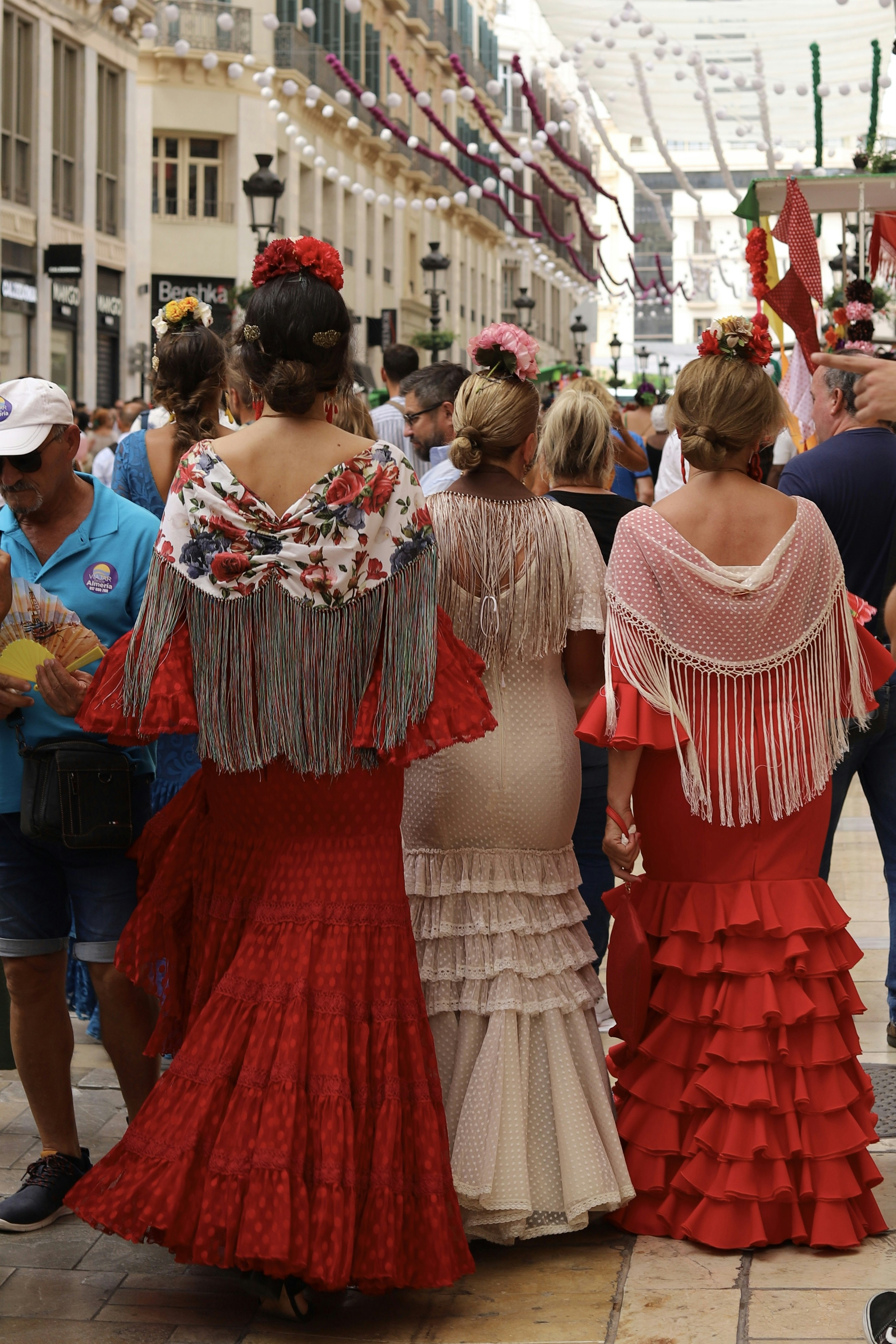
There is a particular beauty in imagining the voices of women traveling across time. I think about Isabel de Villena writing in fifteenth-century Valencia, about the families connected to the city's historic silk industry, and about the generations of women whose knowledge helped sustain households and communities. Their circumstances differed enormously from ours, but they remind me that the desire to leave something meaningful behind has always been part of the human experience.
As I prepare to walk through Valencia's historic streets, I hope I will remember to look beyond the grand buildings and famous landmarks. I want to wonder about the women who lived nearby, the families whose stories unfolded within those walls, and the countless acts of perseverance that made ordinary life possible.
I also want to return home more committed than ever to helping women preserve their own stories before time has an opportunity to carry away details that cannot be recovered.
That commitment is central to the HER Legacy Framework™. When we Honor our lives, we acknowledge the experiences that shaped us. When we Educate the next generation, we transform personal knowledge into a gift that can serve others. And when we Rise into our next chapter, we demonstrate that wisdom does not have to remain hidden within the past. It can become the foundation for new possibilities.
I have reached a season of life when I understand that not everything important can be measured by professional titles, financial accomplishments, or the number of responsibilities we have carried. Some of the most meaningful evidence of a life well lived appears in the people who become stronger, wiser, kinder, or more courageous because we were part of their story.
As I look forward to Valencia, I find myself especially grateful for the women whose voices helped shape mine. Some are still here to share their wisdom, while others live on through the lessons they taught and the love they gave so freely. Their influence travels with me, whether I am speaking on a stage, writing at my desk, meeting with another woman, or preparing to cross an ocean.
And when I finally return home from Spain, I hope to bring back more than photographs, travel memories, and new business ideas. I hope to return with an even deeper appreciation for the extraordinary power of women's stories and a renewed determination to help preserve them.
Because history may remember the names of those who built the monuments, but our hearts remember the women who helped build our lives.
A Legacy Reflection for Every Woman Reading
I invite you to think about a woman whose influence continues to shape your life. Perhaps she was your mother, grandmother, teacher, aunt, sister, friend, or someone who offered encouragement during a difficult season. Consider the lessons she taught, the values she demonstrated, and the stories you wish you had asked her to tell. If she is still living, perhaps this is the week to begin a conversation that will preserve something precious. If she is no longer here, perhaps you can write down the memories you carry and share them with someone who deserves to know her story.
And while you are remembering her, I hope you will give some thought to your own life. There are people who have been strengthened by your presence, encouraged by your words, and influenced by decisions you may have considered unremarkable. Your wisdom deserves to be preserved, not because every moment of your life has been extraordinary, but because the lessons you have gathered may become extraordinary gifts in someone else's hands.
At HER Life Legacy™, I believe the stories of women deserve more than a passing mention in family conversations. They deserve to be honored, thoughtfully preserved, and passed forward with the love and respect they have earned.
After all, the echoes of HER story may become the very wisdom that guides another woman home.
With Southern grace and a heart full of gratitude,
Dr. Argie Nell Nichols
Founder, HER Life Legacy™
Leadership Educator | Legacy Strategist | Author
Helping women live, love, and die without regret.
