The Human Threads That Hold Us Together
Long before I ever heard the words networking, strategic relationships, or social capital, I watched women practice the very thing those phrases are trying to describe. They did it without business cards, professional organizations, social media platforms, or carefully constructed introductions. The women who came before me understood something far more elemental: people need people, and a community survives because someone is willing to keep the human threads tied together.
My grandmother understood that kind of leadership.
Grannie did not need a title announcing that she was influential. She did not need anyone to place her name on a program or introduce her from a stage. Her leadership was evident in the way she treated people, the way she carried herself, the standards she kept, and the wisdom she passed forward. One of the lessons that has remained with me all these years was simple: stand tall and speak kindness with courage. I have carried those words into classrooms, business meetings, difficult conversations, family decisions, and eventually onto an international stage in London.
The older I become, the more I understand how much leadership was hidden inside that simple instruction. Stand tall meant know who you are. Do not apologize for the wisdom life has placed inside you, and do not become smaller merely to make someone else comfortable. Speak kindness meant remember the humanity of the person standing in front of you. Courage meant that kindness does not require silence when truth needs to be spoken. Together those lessons formed a way of moving through the world that was both strong and relational.
That is the kind of leadership I witnessed among many of the women who shaped my early life. They checked on neighbors. They carried food to homes where someone was sick. They knew who had lost a husband, whose child was struggling, and whose family might need help before anyone asked. They remembered birthdays, births, funerals, and stories that connected one generation to another. They understood that relationship was not a professional strategy. It was part of being human.

We have become much more sophisticated in our language today. We talk about building networks, expanding influence, developing platforms, growing audiences, and cultivating strategic partnerships. Those concepts have their place, particularly for women who are building businesses, organizations, ministries, or public platforms. Yet I sometimes wonder whether our grandmothers might remind us not to become so strategic that we forget to become neighborly.
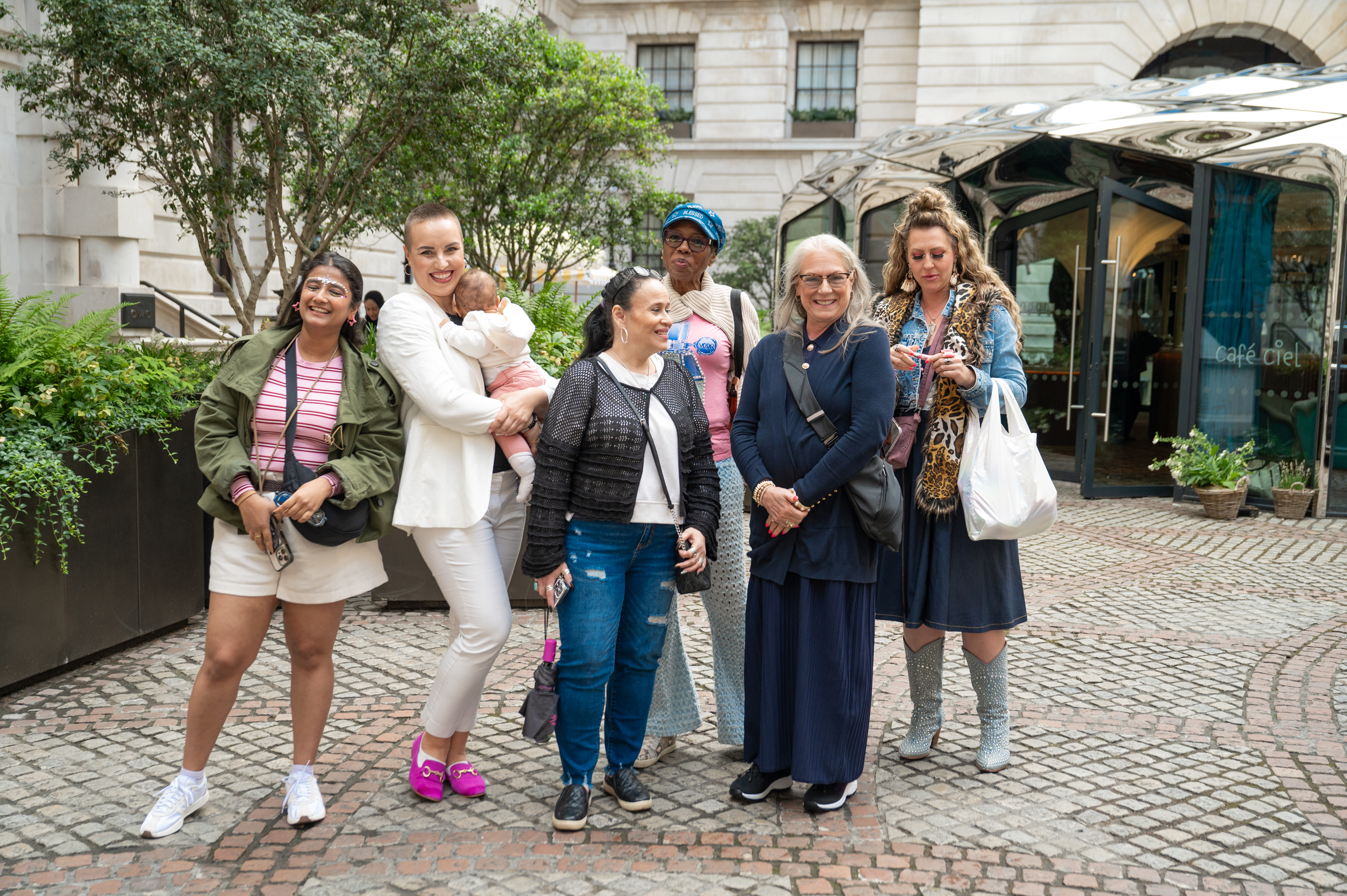
London brought that thought home to me in a new way. I traveled there because I had been invited to speak from an international stage about legacy. That stage gave me the opportunity to carry my voice much farther than Frost Lane or Arkansas. Yet some of the most memorable parts of the week were not the moments when I was the speaker. They were the moments when I became the listener.
Women told me pieces of their lives. They spoke about their hopes, their businesses, their fears, their work, and the things they still wanted to accomplish. Some conversations were brief, yet they mattered. Others felt as if we had somehow skipped past the usual small talk and arrived quickly at something deeper. There is an extraordinary intimacy that sometimes happens when two women recognize a common truth in one another. Age, geography, accent, career, and background can be completely different, yet one story touches another story and suddenly neither woman feels quite so alone.
That is the part of connection I never want to lose in the language of professional networking.
Every person we meet is carrying a story we cannot see from across the room.
A woman who looks confident may be questioning everything. A successful leader may be carrying grief. A young entrepreneur may be longing for someone older to tell her that she is capable. A woman nearing retirement may be terrified that the world is finished needing her. A person we assume has everything figured out may simply need someone to ask a sincere question and remain long enough to hear the answer.
Our elders knew how to do that.
They understood the ministry of paying attention.
That wisdom belongs in leadership today. The most effective leaders I have known did more than direct work. They knew people. They remembered names. They noticed when someone had gone unusually quiet. They could sense when an employee needed correction and when she needed encouragement. They understood that people rarely give their finest effort to someone who makes them feel invisible.
This is one reason I believe legacy leadership must be relationship-centered. We can pass down property, money, jewelry, recipes, and photographs, but some of the greatest inheritances are carried person to person. Courage is passed that way. Faith is passed that way. Confidence is often passed that way. A woman sees something in us before we see it in ourselves, and years later we realize that her belief became part of the foundation on which we built our life.
I am living proof of that.
The words of my grandparents followed me all the way to London. Grannie could never have known every room those lessons would enter. She could not have predicted that her granddaughter would one day speak internationally about leadership and legacy. She simply lived her values faithfully in the place where she had been planted.
“The women before us did not need to call it networking. They simply understood that a strong life is woven from strong human threads, and they taught us never to let those threads break carelessly.”
That may be one of the most beautiful truths about legacy. We rarely know how far our influence will travel.
Something we teach a child may become the principle she uses to lead a company forty years later. A story told around a kitchen table may become the story a granddaughter repeats from a stage. A woman we encourage today may become someone who encourages hundreds of others tomorrow. We do not need to see the final destination of our influence for it to be real.
Perhaps this is why I am so interested in the connections that came from London. I do not know which ones will become professional opportunities and which will become friendships. I do not know who may eventually introduce me to another audience or who may simply remain a woman whose life I am grateful to know. What matters most is that our stories intersected. Something new became possible because we found one another.
The women before us knew that connection was not weakness. It was how families, communities, and generations survived. Their circles may have been geographically smaller than ours, but their relational wisdom was enormous.
We would do well to remember it.
As we build networks today, perhaps we can build them with an older kind of wisdom. Let us stand tall enough to bring our full selves into the room, speak kindly enough that people feel safe in our presence, and have the courage to make connections that are deeper than usefulness.
Your legacy will not only be found in what you accomplish.
It will also be found in the people who remember how you made them feel.
This week, think about the women whose voices still echo inside you. Perhaps it was a grandmother, mother, aunt, teacher, neighbor, mentor, or friend. What did she teach you about people? What did she model about community? What part of her way of loving, leading, or connecting lives in you now?
Then carry it forward.
That is how HER continues.