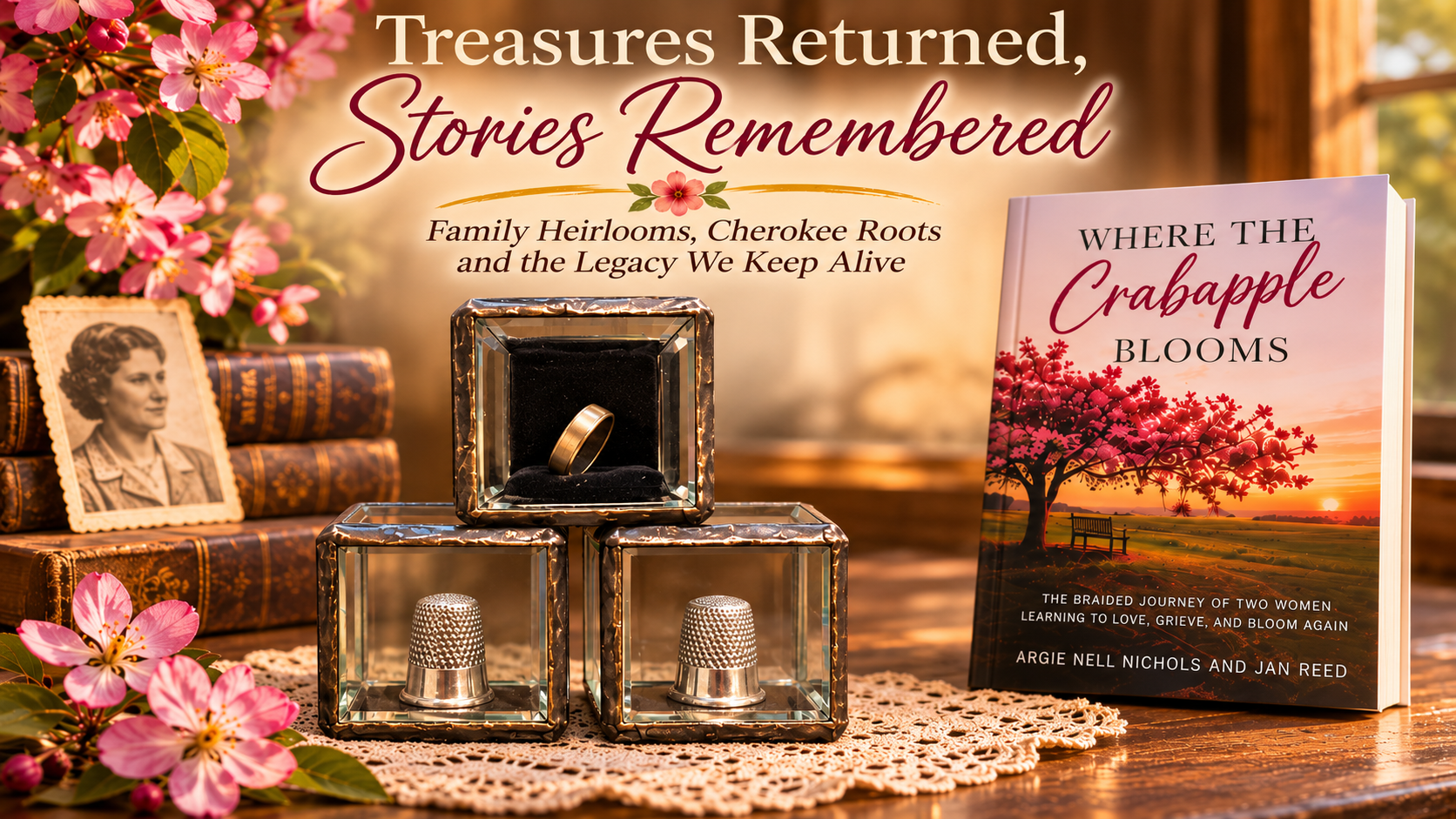
What Finds Its Way Back to Us: The Stories, the Heirlooms, and the Heritage We Carry
There is something extraordinary about the things we believe we have lost forever finding their way back into our hands. Sometimes those things are possessions, sometimes they are memories, and sometimes they are pieces of our family history that have been waiting patiently for someone to recognize their worth. Over the past few weeks, I have been reminded that what we inherit from those who came before us is not always measured by its monetary value. Often, the greatest treasures are the ones that help us remember who we are, where we came from, and whose lives made our own possible.
When I returned home from Spain, I was ill, exhausted, and trying to prepare for the live celebration of Where the Crabapple Blooms, the book Jan Reed and I had poured so much of our hearts into writing. Somewhere along the way, my suitcase had disappeared. After the searching, the conversations, and the frustration, I had finally accepted that it was gone. I had begun making peace with the loss of everything inside when the unexpected news arrived. My suitcase had been found, and every single thing was still there.
But another homecoming was taking place, and this one reached much deeper into my family history.
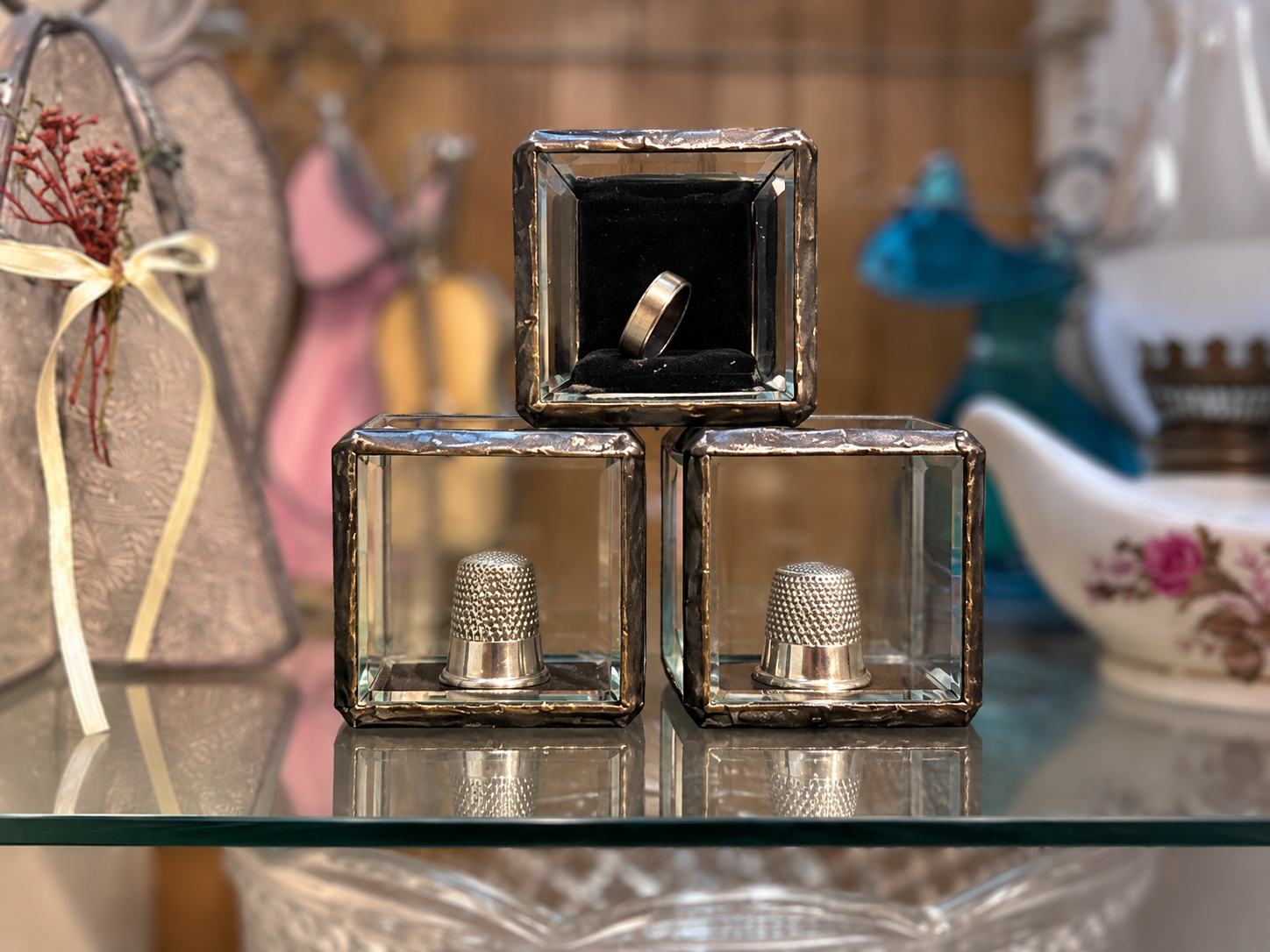
For years, precious family heirlooms had been missing from my life. Among them were my grandmothers’ thimbles and a wedding ring, small objects that might seem insignificant to someone who did not know the stories behind them. My son understood what they meant to me, and he stepped forward to advocate for their return through conversations with family members. Because of his efforts, those treasured pieces of our family's past finally came home.
Today, they have a place of honor in beautiful custom glass display boxes, carefully suspended where they can be seen and appreciated. The thimbles remind me of the hands that worked, the ordinary responsibilities that filled my grandmothers’ days, and the quiet contributions that helped build the life my family knows today. The wedding ring speaks to commitment, belonging, and the generations whose stories are intertwined with my own.
My Cherokee heritage has given me another reason to think deeply about the responsibility of remembering. As I continue exploring my family's Cherokee roots, I find myself asking questions that I wish I had asked much earlier. What did my ancestors experience? Which stories were passed down, and which were lost along the way? What did the older generations understand about family, perseverance, and belonging that I still have an opportunity to learn?
I do not want to fill the gaps in our history with assumptions or romanticized stories. I want to honor the truth of the lives that came before mine, including the details we can document, the memories we can preserve, and the questions that may never be completely answered. To me, honoring my Cherokee ancestry means being willing to seek those answers with patience, respect, and gratitude.
That is why the return of my grandmothers’ belongings means so much more than simply recovering something that was missing. Their thimbles and ring offer a doorway into conversations that might otherwise never happen. They remind me that each generation has a responsibility not only to safeguard what it receives, but also to explain why it matters to the generations that follow.
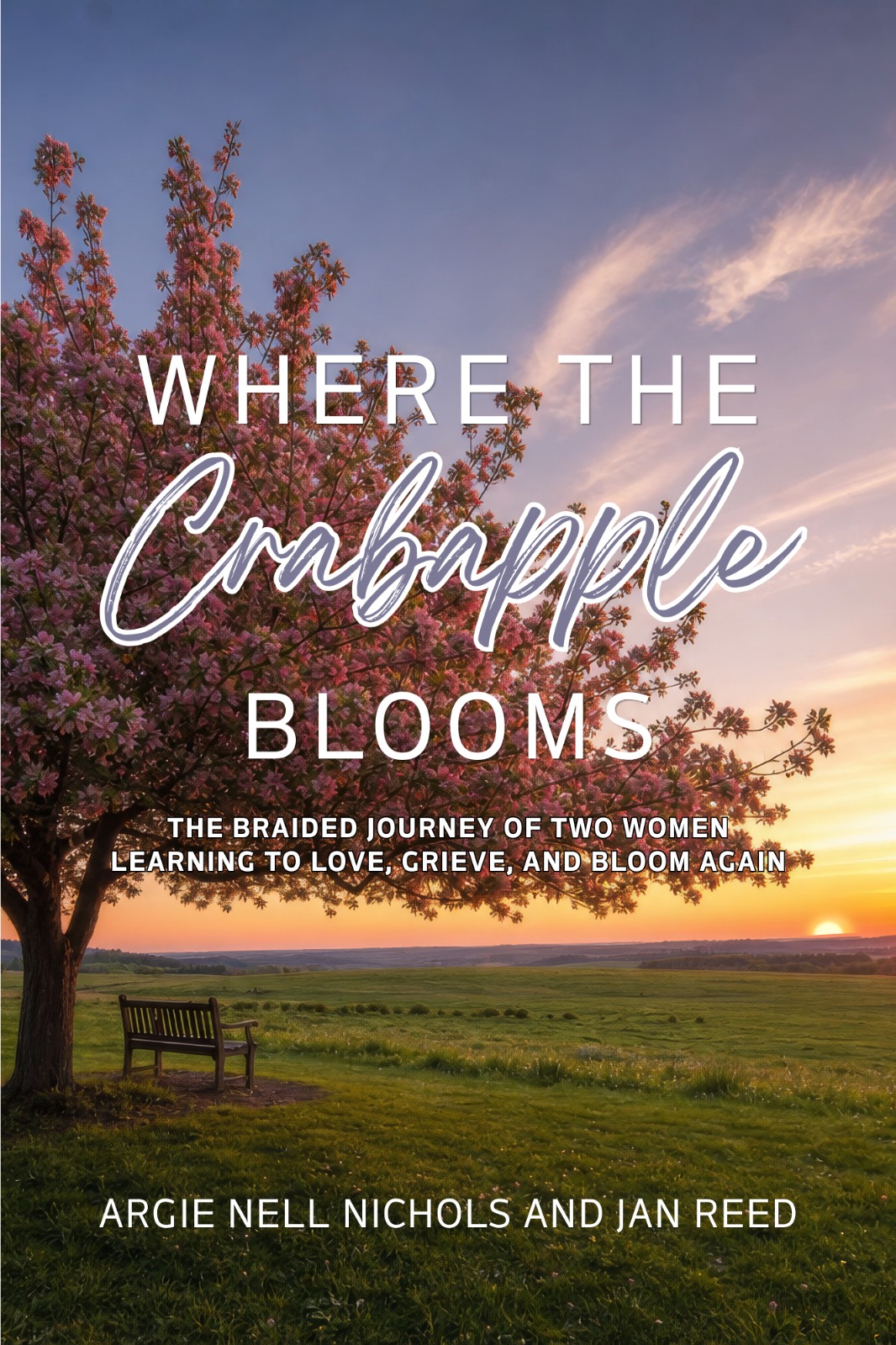
This is one of the reasons Jan and I wrote Where the Crabapple Blooms. Although our book grew from the heartbreak of losing people we dearly loved, it also grew from our determination to keep their stories alive. We wanted the world to know more than how Mickey and Dwayne died. We wanted readers to understand how they lived, how they loved, and how their lives continue to influence the people they left behind.
When I look at those little glass boxes now, I realize that my son helped preserve something far greater than a collection of family possessions. He helped restore a connection between generations. In doing so, he reminded me that legacy is not merely what our ancestors leave for us. It is also what we choose to protect, understand, and pass forward.
And perhaps that is the most beautiful lesson of these unexpected homecomings. Not everything that disappears is lost forever, but we cannot count on every treasure returning. We must care for the stories, relationships, and family memories that are still within our reach.
For those of us who carry ancestral histories worth preserving, whether Cherokee or from another family heritage, the invitation is much the same. Ask the questions while someone is still here to answer them. Record the stories while the voices are still familiar. Give the small family treasures a place of honor, but make certain their meaning is preserved alongside them.
Because someday, a grandchild may hold an old thimble or wedding ring and wonder whose hands once treasured it. What a blessing it would be if we had already given them the story.
Purchase Where the Crabapple Blooms
Until we meet again, may we never forget the hands that came before ours, the love that helped shape our lives, or the stories that are still waiting to be told.
With love, gratitude, and a heart for the generations yet to come,
Dr. Argie Nell Nichols
HER Life Legacy™ — HONOR. EDUCATE. RISE.
