The Day Papa Showed Me What Lasts
What My Cherokee Grandfather Taught Me About Welcoming a Stranger
There is a question I have found myself asking more often as I've grown older.
Where did Papa learn to become the man I admired so deeply?
As a little girl, I assumed kindness simply belonged to him. I thought his patience, generosity, and quiet strength were part of his personality.
Today, I wonder if they were something much older.
Perhaps they were an inheritance.
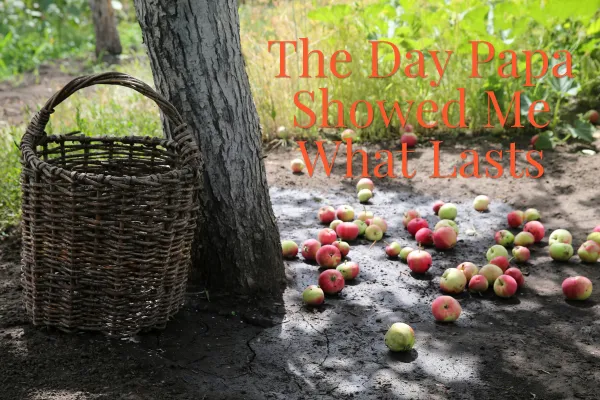
One warm summer afternoon, I sat beneath the old apple tree at the end of our garden on our Arkansas ranch. From that shady spot, I watched my grandfather, Fonie, whom everyone simply knew as Papa, plowing the garden behind our old gray mare, Bird.
Bird steadily pulled the turning plow through the rocky Arkansas soil while Papa guided the handles with practiced hands. The rhythm between them was almost musical. Bird trusted Papa, and Papa trusted Bird.
To me, it was simply another ordinary afternoon.
Then a car stopped in front of our house.
A stranger climbed out and walked toward the garden.
I expected Papa to point toward the road and continue plowing.
Instead, he stopped Bird.
He rested his hands on the plow handles, greeted the man with a smile, patiently gave him directions, and then asked something that surprised me.
"Would you like a drink of water before you head on your way?"
The man accepted.
The directions probably faded from his memory before the day was over.
I doubt he ever forgot the kindness.
As a child, I thought I had watched a simple act of hospitality.
Looking back, I believe I witnessed something much deeper.
I believe I witnessed a legacy.
For many Indigenous peoples, including the Cherokee, identity was never understood as something that belonged only to the individual. A person's character reflected the family, the clan, and the community that shaped them. Elders understood that children learned far more by observation than by instruction. Values were carried through daily life, ordinary work, shared meals, and the countless small choices that revealed what mattered most.
Papa never gathered me beneath the apple tree for a lecture on kindness.
He didn't need to.
He lived it.
Long before anyone used phrases like servant leadership, emotional intelligence, or psychological safety, people learned leadership by watching the elders who came before them.
That afternoon, I thought Papa had paused his work.
Now I understand something different.
People were his work.
Our modern world often rewards efficiency.
Finish the task.
Answer the email.
Move to the next meeting.
Cross another item off the list.
Yet I wonder what we've lost when productivity becomes more important than presence.
Cherokee teachings have long emphasized living in harmony with one another, caring for relationships, and recognizing that every action affects the larger community. While those teachings are expressed in many different ways across families and generations, they remind us that our daily choices ripple far beyond the moment in which they are made.
Perhaps legacy has never been about extraordinary moments.
Perhaps it has always been about ordinary moments repeated faithfully over a lifetime.
A stranger asking for directions.
A glass of cool water on a warm Arkansas afternoon.
A grandfather who understood that no field was more important than the human being standing in front of him.
As I sat beneath that apple tree, I thought I was watching Papa plow a garden.
Looking back, I realize he was cultivating something far more important.
He was quietly planting seeds in his granddaughter that would not bloom for another sixty years.
Those seeds became my convictions about leadership, stewardship, kindness, and legacy.
Long before I earned a doctorate, stood on a stage, or founded HER Life Legacy, Papa was teaching me that the most meaningful work we ever do is found in the way we treat other people.
That is the legacy we live before we leave.
Legacy Action
This week, choose one moment to intentionally pause for someone who cannot repay you.
Listen a little longer.
Offer encouragement.
Hold a door.
Share your time.
Ask someone's name.
You may never know how that simple act becomes part of another person's story.
Legacy Research Corner
Marshall Duke & Robyn Fivush
Topic: Family Stories and Intergenerational Resilience
Why it matters: Decades of research have shown that children who know their family stories, especially stories of perseverance, kindness, and overcoming adversity, often demonstrate greater resilience, stronger identity, and a deeper sense of belonging. Legacy is not passed primarily through possessions but through stories that reveal who we are and what we value.
Learn more:
Marshall Duke's work on family narratives:
https://scholar.google.com/scholar?q=Marshall+Duke+family+narrative
The "Do You Know?" family narrative research summarized by the Emory University community:
https://news.emory.edu/stories/2013/03/family_stories/index.html
"One afternoon beneath an apple tree taught me more about leadership than decades of professional success. The lessons that last are rarely delivered from a podium. More often, they are quietly lived by someone who never realized a child was watching."
