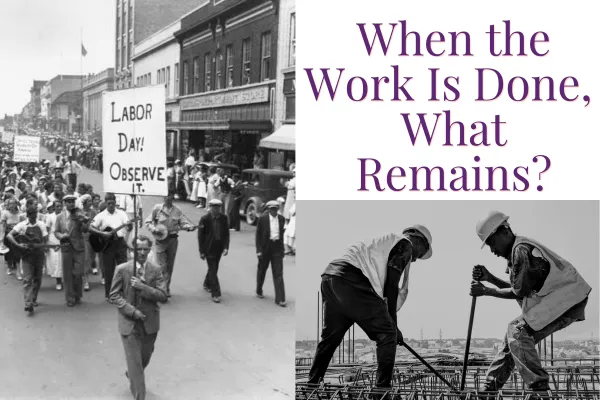
When the Work Is Done, What Remains?
There is a particular dignity in looking back over a life of work and realizing that the years were never measured only by paychecks, titles, promotions, or the number of hours recorded on a timecard. Work becomes woven into us. It shapes our discipline, introduces us to people who change us, teaches us what we are capable of carrying, and often becomes one of the primary ways we provide for the people we love. Perhaps that is one reason Labor Day deserves more reflection than we usually give it. Beneath the picnics, sales, and final unofficial weekend of summer is a holiday created to honor the contribution of working people to the strength and well-being of this nation.
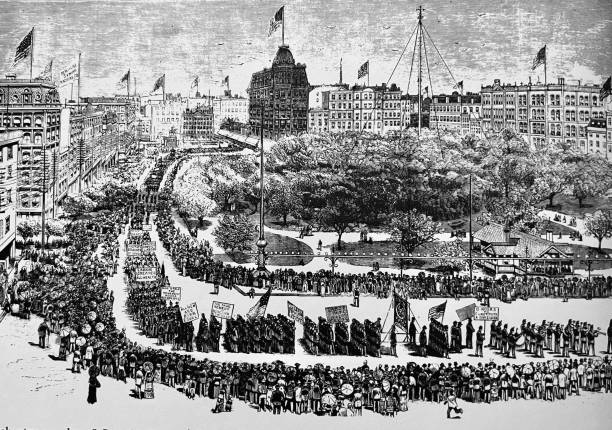
The first Labor Day celebration took place in New York City on September 5, 1882, when about 10,000 workers marched through the streets before gathering with their families for a picnic, music, and speeches. The movement spread, Oregon became the first state to officially recognize the holiday in 1887, and in 1894 Congress established the first Monday in September as a national holiday. From its beginnings, Labor Day was intended to recognize the social and economic contributions of American workers.
But I believe there is another conversation hidden inside this holiday, particularly for those of us who have accumulated many decades of working, serving, leading, raising families, building businesses, teaching others, and carrying responsibilities that once seemed as though they might never end.
What happens when the work changes?
There comes a season when many women discover that the work that once organized their lives no longer occupies the same place. Retirement arrives. Children no longer need us in the same way. A business is sold, a career ends, leadership responsibilities are transferred, or the pace simply changes because we have changed. For women who have spent much of their lives being productive, needed, and responsible, this transition can feel surprisingly unsettling.
Yet finishing well does not mean working until there is nothing left of us. It means understanding what the work was ultimately for.
“Eventually every career ends and every title belongs to someone else. What remains is what we learned, whom we helped, what we strengthened, and what we taught.”
My generation was taught to work. Many of us watched parents and grandparents who believed responsibility was simply part of adulthood. You got up. You did what needed doing. You provided for your family. You kept your word. You took care of what belonged to you. You did not expect applause every time you fulfilled an obligation.
There was wisdom in that.
Still, as we reach our legacy years, there is another kind of work before us. It is the work of deciding what all those years have taught us and what deserves to be carried forward.
The younger people in our families may never do the work we did. They may not choose our professions, live where we lived, run the businesses we built, or value every tradition exactly as we did. Our responsibility is not to turn our lives into instructions they must follow. Our responsibility is to help them understand the wisdom beneath the work.
Perhaps your work taught you perseverance. Perhaps it taught you that money should be handled carefully because you remember what it meant not to have enough. Perhaps leadership taught you that people remember how you treated them long after they have forgotten the goals you achieved. Perhaps farming taught you patience, teaching taught you hope, business taught you courage, nursing taught you compassion, or motherhood taught you that some of the most important work in a life will never appear on a résumé.
Those lessons are part of your American legacy too.
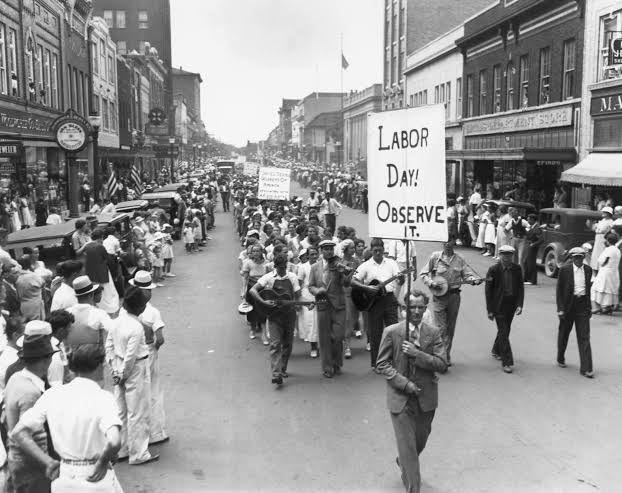
We often think of American history as something built by presidents, generals, inventors, and famous leaders. Yet much of America was built quietly. Someone taught the children. Someone harvested the fields. Someone opened the store each morning. Someone built the bridge, kept the books, cared for the sick, swept the floor, repaired the machine, drove the truck, answered the telephone, cooked the meals, and stayed late because something had to be finished.
Most of their names will never be recorded in history.
But their work mattered.
As another Labor Day passes, I find myself less interested in asking how many years we worked and more interested in asking what those years produced inside us. Did they make us wiser? More compassionate? More responsible? More grateful? Did they give us something worth teaching?
Because eventually every career ends and every title belongs to someone else. The office door closes. The business changes hands. Someone younger steps into the position we once held.
And then we discover the deeper question of finishing well: When the work is done, what remains?
I hope the answer is more than what we earned.
I hope it is what we learned, whom we helped, what we strengthened, what we taught, and what we faithfully placed into the hands of the generations coming behind us.
That may be the finest Labor Day tribute of all.