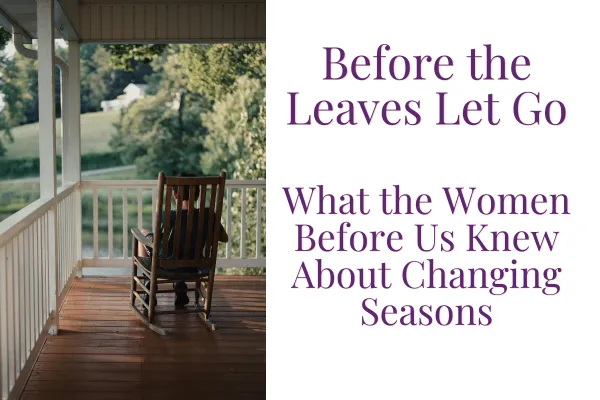
Before the Leaves Let Go
Long before women talked about reinvention, second acts, encore years, or finding their next chapter, there were women who simply understood seasons. They knew when it was time to plant and when it was time to gather. They knew there were years when the garden produced more than the family could eat and other years when weather, insects, rocky ground, or circumstances beyond anyone's control changed the harvest. They understood that some things could be saved, some things needed to be used while they were available, and some things simply had to be released.
They did not always have language for personal transformation, but they understood change.
I think about that as September arrives. There is a moment before autumn fully announces itself when the world seems to hesitate. Summer has not disappeared, the trees are still mostly green, and the days can still be warm enough to make you wonder whether fall is really coming at all. Yet something has shifted. The light falls differently. The mornings carry a hint of coolness. The air seems to know what the calendar has not quite declared.
Perhaps women are not so different. Sometimes, long before the people around us recognize that something has changed, we already know. We sense that an old season is loosening its hold, even if we do not yet know what the next one will require of us.
The Women Before Us Changed More Than We Remember
It is easy to look backward and imagine that the women of earlier generations lived predictable lives. We see them in photographs standing beside husbands, children, gardens, church doors, porches, kitchens, barns, or automobiles that now look impossibly old. The photograph captures a single moment, and because the image never changes, we can accidentally imagine that the woman did not change either.
But think about what many of those women lived through. They buried people they loved, endured economic hardship, moved from farms into towns and towns into cities, and watched electricity, telephones, automobiles, television, airplanes, computers, and eventually an entire digital world transform daily life. They sent sons to war, raised daughters whose lives looked very different from their own, cared for aging parents while raising children, and adjusted to changing marriages, changing communities, changing bodies, changing expectations, and changing ideas about what women could become.
Some worked outside the home because they wanted to, while others worked because there was no other choice. Some built businesses without ever calling themselves entrepreneurs. Others managed farms, households, budgets, children, sick relatives, church committees, gardens, livestock, and communities with the organizational ability of a seasoned executive.
They changed. They simply did not always announce it.
There is something deeply moving about that. Today we are encouraged to make declarations about our transformations. We name our goals, create vision boards, announce launches, document milestones, and sometimes feel as though change is not real unless other people witness it. The women before us often changed quietly, and perhaps there is wisdom in that too.
Not Every Transformation Needs an Audience
Some of the most important changes in a woman's life happen where almost no one can see them. She decides she will no longer carry an old resentment. She stops trying to win the approval of someone who has never been generous with it. She forgives herself for something she has replayed for years. She admits that a dream has ended and allows another dream to begin.
She may finally understand that being strong does not mean carrying everything. She may begin saying no without preparing a twenty-minute explanation, stop trying to keep every family member happy, or make peace with a body that has carried her through decades of living. She may write the story, make the call, wear the lipstick, start the class, or simply quit waiting for permission.
The outside world may see almost nothing, but inside that woman an entire season has changed.
I sometimes wonder how many of our grandmothers and great-grandmothers experienced transformations like these that no one ever recorded. We inherited photographs, recipes, quilts, dishes, jewelry, Bibles, land, furniture, letters, and family names, but how much of their inner lives did we inherit? Who did they have to become? What did they have to release? What did they learn too late? What did they begin again? What did they secretly want, and what did they survive without ever telling us the complete story?
Those questions are part of why I believe so deeply in preserving the wisdom of women. An ordinary life contains far more history than we realize, and sometimes the most valuable parts are the ones no official record ever captured.
The Tree Does Not Carry Every Leaf Into Winter
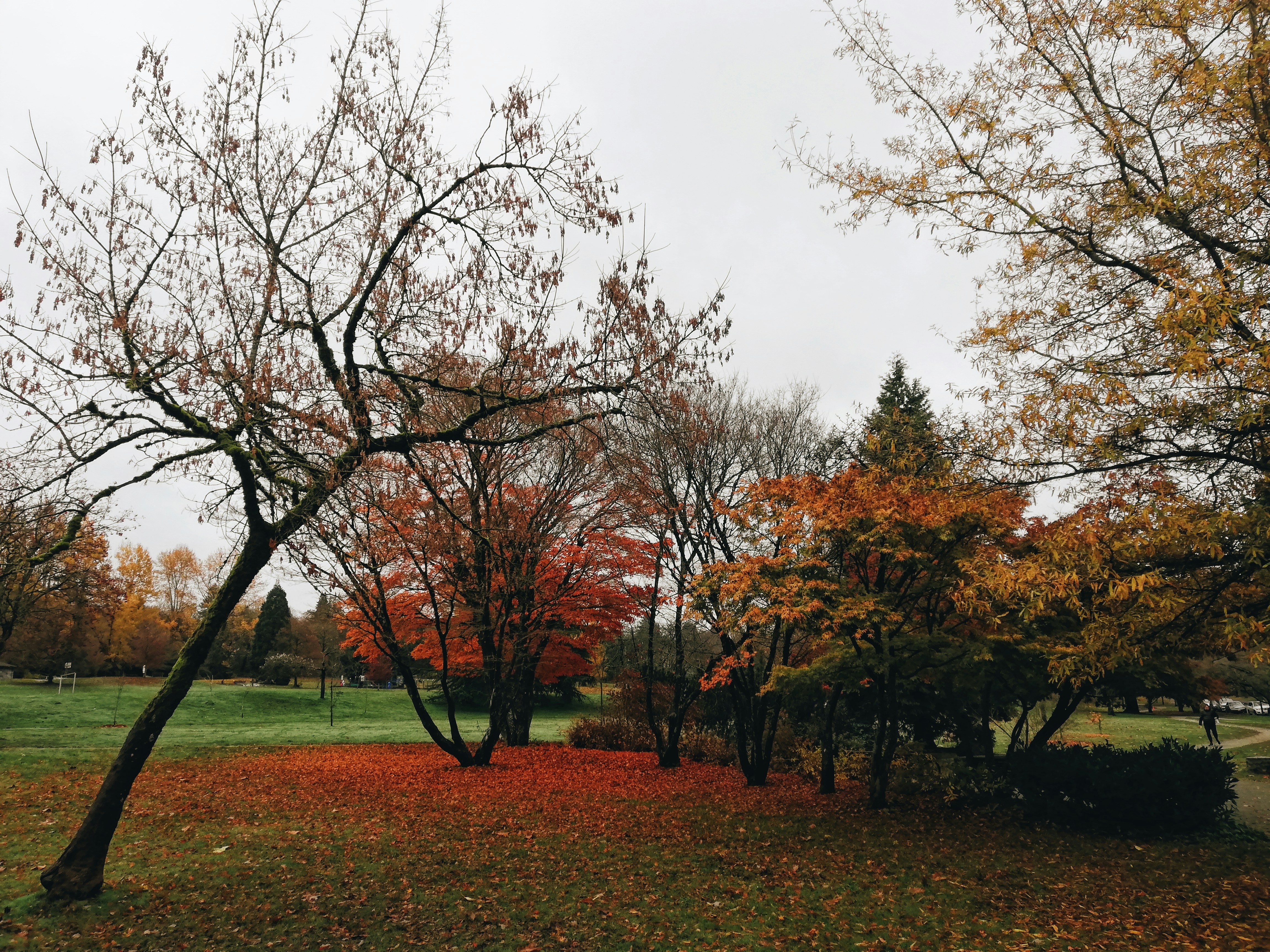
There is an apple tree in so many of my childhood memories that I cannot think about seasons without thinking about trees. Trees have their own kind of wisdom. They do not release everything at once, nor do they wake up on September first and decide that summer is over. The process is gradual. One leaf changes, then another. The color deepens, what once clung tightly begins loosening, and eventually the tree lets go of what it cannot carry into winter.
I think there are seasons when women must do the same.
We do not need to discard our history. In fact, I believe quite the opposite. We need to honor it, preserve it, learn from it, and carry its wisdom forward. But history and baggage are not the same thing. Some things belong in our story but no longer belong in our hands.
An old disappointment may always be part of what happened, but it does not have to direct what happens next. A role you played for decades may always be part of your identity, but it does not have to be your only identity. A mistake may always be part of your history, but it does not have to become your definition. A loss may always ache, but that does not mean joy betrays the person you lost.
Perhaps that is one of the hardest lessons of changing seasons: letting go does not mean that what came before did not matter. Sometimes we release something precisely because it mattered and because its season has been completed.
What Did the Women Before You Carry?
There is a question I wish more of us would ask while the women who came before us are still here to answer it. We often ask where they were born, when they married, who their parents were, and where they went to school. Those facts matter, and we should record them. But I wish we would go further.
Ask her what season of her life changed her the most. Ask whether there was ever a time when she had to begin again. Ask what she had to let go of that was difficult, when she discovered she was stronger than she thought, or what she understands about life now that she wishes she had understood at forty.
Those answers are inheritance.
They may never be listed in a will, but they may become far more valuable than the things that are. When our own season changes, and it will, we need more than advice. Sometimes we need evidence. We need evidence that women before us faced uncertainty and continued, that grief did not have the last word, that an identity could change without a life losing its meaning, and that starting over was possible before anyone gave it a fashionable name.
The women before us left that evidence everywhere. We simply have to learn how to recognize it.
Perhaps You Are Becoming the Woman Someone Else Will Remember
There is another side to this conversation that becomes more meaningful the older I grow. One day, we will be the women before. Someone may hold one of our photographs, prepare one of our recipes, wear something that once belonged to us, or tell a story that begins, "My grandmother always said..."
Someone may wonder what we thought, what we believed, what frightened us, what sustained us, and what we learned when life did not unfold according to plan.
That realization changes the way I think about my own season. We are not merely receiving an inheritance of wisdom. We are creating one.
The way we handle change teaches. The way we speak about aging teaches. The way we respond to disappointment teaches. The way we begin again teaches. The way we treat people when life becomes difficult teaches. The way we release what no longer belongs teaches.
Someone is learning from the way we live this season, even if we do not realize she is watching. That is an echo. Not an echo that simply repeats the past, but one that carries something forward.
The women before us did not leave us instructions for every season we would face. They left us evidence that a woman can change, endure, release, begin again, and still remain fully herself.
Perhaps that is enough.
Before This Season Passes
This week, I want to invite you to think of one woman who came before you. She may have been your mother, grandmother, aunt, teacher, neighbor, family friend, or simply a woman whose life crossed yours long enough to leave something behind.
Do not begin by thinking about what she accomplished. Think about what she survived. Think about the seasons she lived through and how many times she may have had to become someone new without ever using those words.
Then write down one thing her life taught you about change.
If she is still living, perhaps you can ask her about it. If she is gone, record what you remember before the details grow faint. Seasons change, leaves fall, people leave us, and memories soften around the edges. One of the responsibilities of becoming an elder is learning to gather the wisdom before it disappears.
September will move quickly. Soon the trees will release what summer gave them, and another season will take its place.
Before the leaves let go, perhaps we should listen for the women whose wisdom is still rustling among them.
Their lives are still speaking, and somewhere inside their stories may be exactly the courage we need for the season we are entering.