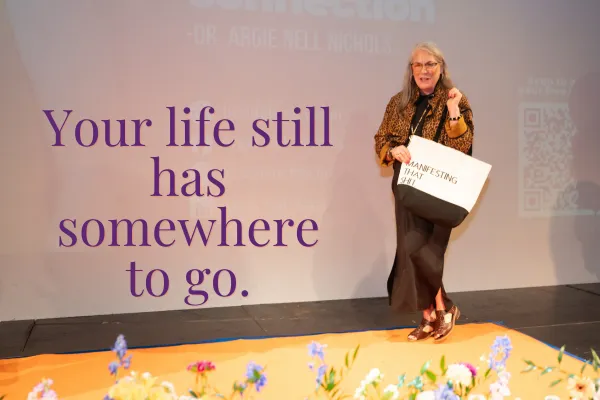
Your Life Still Has Somewhere to Go
There comes a moment in a woman’s life when she must decide whether the years behind her will become evidence that she is finished or proof that she is prepared. For me, one of those moments arrived in London.
I stood backstage at Women Thrive Live knowing that, in a few minutes, I would walk onto an international stage and speak to women from different countries, professions, and life experiences. I had prepared my message. I knew the opening line. I had practiced the stories, the transitions, and the final invitation I wanted to leave with the audience. But preparation does not silence every question, and there was still a part of me that understood the enormity of the moment.
I was 70 years old. I had traveled from the hills of Arkansas to stand in a room far beyond the geography of my beginning. I was not there as a young woman launching her career or as someone who had spent decades cultivating international celebrity. I was there as a woman who had lived.
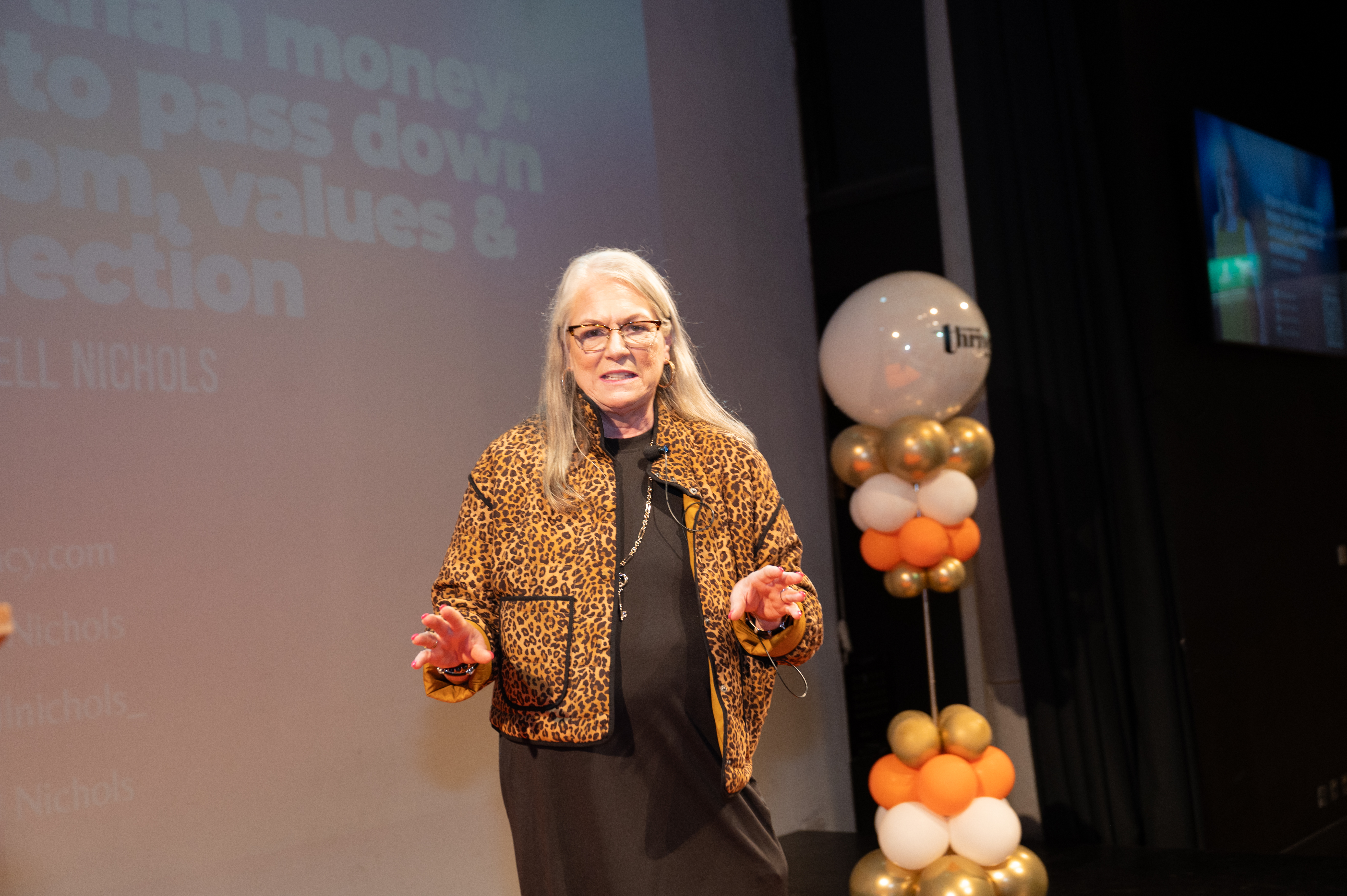
I brought with me 45 years in education, years of leadership, financial coaching, family stories, Cherokee roots, faith, loss, reinvention, and the growing conviction that women become more valuable when they finally understand the significance of what they know. I took a breath, walked onto the stage, and said, “Good afternoon, London, from the hills of Arkansas.”
The room responded warmly, but the deepest response happened inside me. In that moment, I realized that my life still had somewhere to go.
The Dangerous Assumption That Our Best Work Is Behind Us
Many women reach their sixties and seventies with an impressive history and a shrinking sense of possibility. They have raised families, built careers, led organizations, cared for aging parents, survived illnesses, buried people they loved, and carried responsibilities that would have overwhelmed them when they were younger. Yet instead of seeing those experiences as preparation for a greater contribution, they begin treating them as evidence that their meaningful work has ended.
They begin speaking about their lives in the past tense. “I used to teach. I used to lead. I used to travel. I used to dream about writing. I always wanted to speak.”
Without realizing it, a woman can begin moving her unfinished desires into a museum of things that almost happened. She visits them occasionally, dusts them off with nostalgia, explains why the timing never worked, and then returns to a life that feels safe, responsible, and increasingly small.
I understand the temptation. There are practical questions that arise later in life. How much energy will this require? Can I afford it? What if I invest in myself and the outcome is uncertain? What will people think if I begin something ambitious at this age? Beneath those questions, however, is often a more painful one: What if I discover I waited too long?
The answer is not to pretend that time is unlimited. The answer is to stop wasting the time that remains by assuming it cannot hold anything new.
Finishing Well Does Not Mean Fading Quietly
For years, the phrase “finishing well” has been used to describe responsibility, integrity, and leaving one’s affairs in order. Those things matter, but finishing well is not simply about creating a graceful exit. It is about remaining fully alive while we are still here.
Finishing well means refusing to confuse maturity with disappearance. It means recognizing that our later years are not merely a period of winding down. They can become a season of concentrated wisdom, clearer priorities, and more intentional contribution.
“The years behind you are not evidence that your best work is finished. They are the preparation that makes your next chapter possible.”
I call this the Golden Chapter.
The Golden Chapter is not defined by a woman’s age. It begins when she understands that the life she has lived has prepared her to contribute in a way she could not have contributed before. In her earlier years, she may have possessed energy but lacked perspective. She may have held ambition without clarity. She may have been building a career, raising children, paying bills, meeting expectations, and trying to become the person everyone needed her to be.
Later life offers a different opportunity. A woman may finally know what matters. She may understand what she no longer needs to prove. She may recognize which relationships deserve her attention, which dreams still call to her, and which parts of herself she abandoned while caring for everyone else.
The Golden Chapter begins when she stops asking whether she is too old and starts asking what her years have prepared her to do. London was part of my Golden Chapter. It was not an attempt to recapture youth. It was an expression of earned purpose.
Bigger Stages Begin With Private Decisions
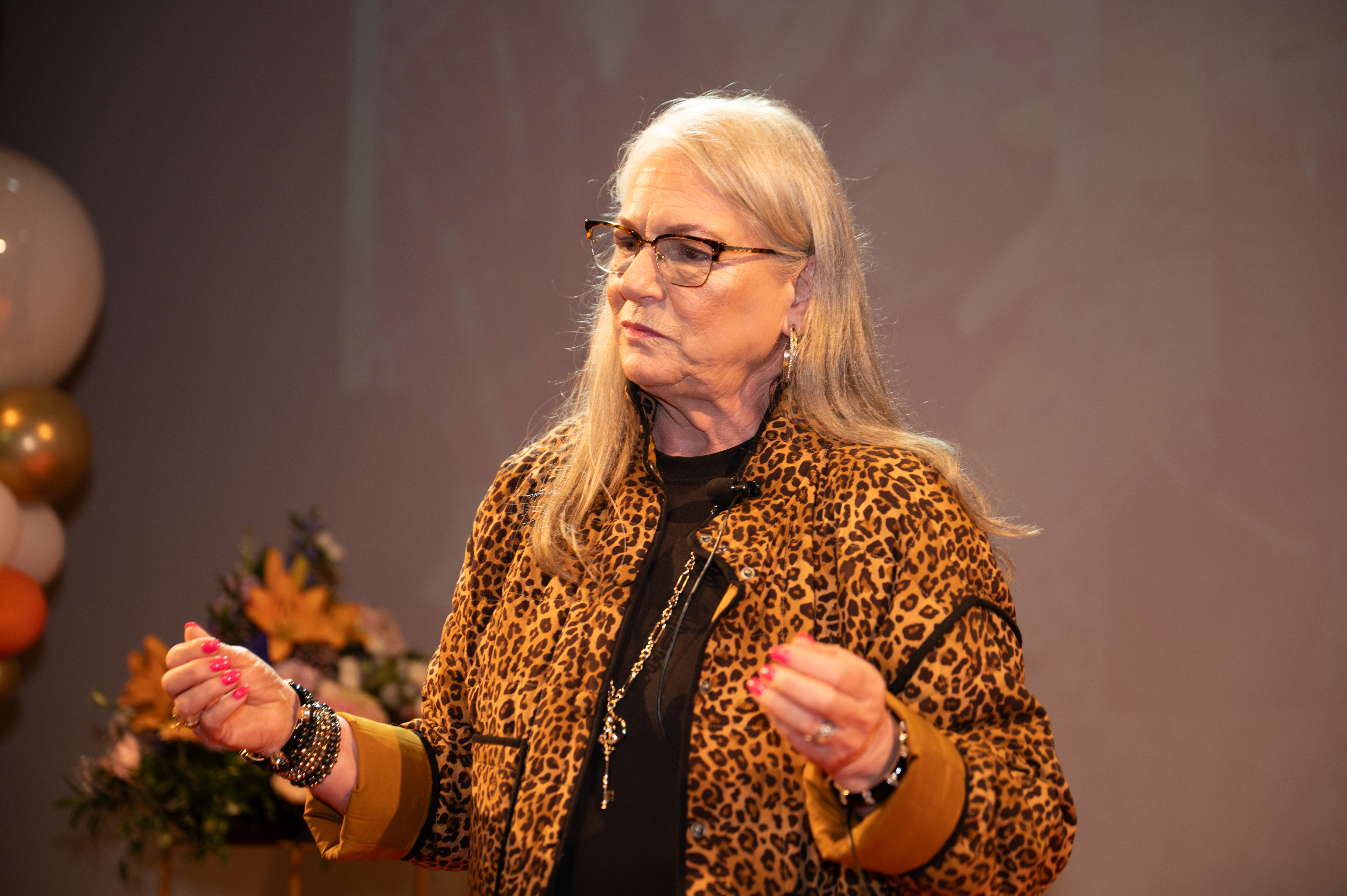
People often see the public moment and miss the private decisions that made it possible. They see the photograph of the speaker standing onstage, but they do not see her studying the opportunity, calculating the cost, arranging the travel, revising the speech, questioning herself, and choosing to move forward anyway.
The bravest moment is rarely the walk toward the microphone. It is the moment a woman decides not to dismiss the opportunity before she has seriously considered it.
Fear has a predictable vocabulary. Who do you think you are? What if you fail? What if no one cares? What if the money could be used for something more practical? What if the people in the room are more accomplished than you?
Fear does not always tell us to stop because the opportunity is wrong. Sometimes fear becomes loud because the opportunity is asking us to expand. That does not mean every invitation should be accepted. Wisdom requires discernment. Not every stage aligns with our values, audience, message, or financial capacity. Still, we should be careful not to disguise fear as wisdom.
There is a difference between saying, “This opportunity is not right for me,” and saying, “I could never belong there.” One is discernment. The other may be self-abandonment.
Before London, I had to determine whether the event aligned with my work and whether I was willing to invest in getting there. I had to think about travel, accommodations, professional materials, clothing, time, energy, and what I hoped the experience would produce. I was not buying a few minutes on a stage. I was investing in the reach of my message.
The Price of Staying Small
Women often ask about the cost of pursuing a larger opportunity. It is a responsible question, but there is another cost we rarely calculate. What does it cost to remain unseen? What does it cost to keep a message hidden because sharing it requires risk? What does it cost to postpone a dream until age, health, or circumstance makes it impossible? What does it cost the people who might have been helped by the wisdom we refused to offer?
The price of staying small is not always visible on a bank statement. It may appear as regret. It may appear as resentment toward women who took chances we would not take. It may appear as the quiet ache of knowing that we were capable of more but repeatedly chose what was comfortable.
This does not mean spending irresponsibly or chasing every glamorous invitation. Bravery and stewardship must travel together. A woman may need to save for an opportunity, seek a sponsor, build a travel fund, create new income, use rewards points, share accommodations, or connect the trip to additional professional opportunities. She may also decide to begin with a stage closer to home.
The important thing is that money becomes part of the plan, not the reason the dream is dismissed before planning begins.
When I consider the value of London, I do not measure it only in airfare or hotel expenses. I consider what the experience added to my Legacy Capital™. Legacy Capital includes the wisdom we carry, the reputation we build, the relationships we nurture, the stories we preserve, and the influence our work creates.
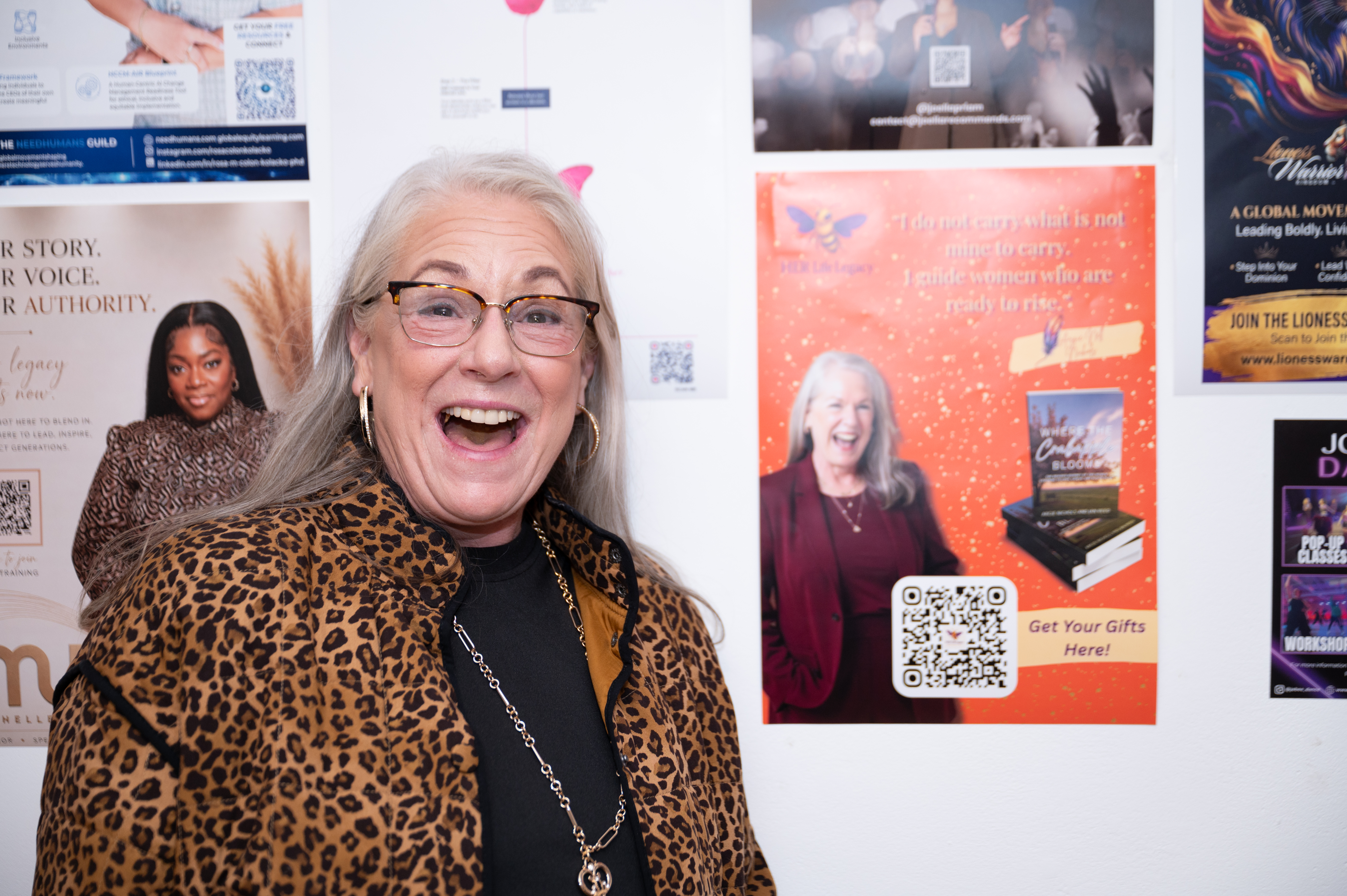
London expanded mine. It gave me evidence that my message could cross borders. It connected me with women I would not otherwise have met. It gave me professional photographs, memories, stories, and content that will continue serving my work. Most importantly, it changed the limits I had unconsciously placed on myself.
The Stage Is Never Only About the Speaker
A larger stage can awaken the ego if we allow it. There are photographs, applause, introductions, titles, and the visible symbols of achievement. But the true purpose of a stage is not to prove that the speaker is important. It is to serve the people listening.
When I stood before the women in London, I was not there merely to announce that I had arrived. I was there to tell them something I believed could change the way they viewed their lives.
I spoke about leaving more than money. I spoke about the inheritance of stories, wisdom, faith, values, relationships, and connection. I wanted them to understand that their legacy was not waiting for the end of their lives. It was being created in the conversations they initiated, the truths they preserved, the apologies they offered, the boundaries they established, and the wisdom they intentionally passed forward.
As I looked into the audience, I thought about the individual woman who might have begun to believe that her most influential years were behind her. I wanted her to hear me clearly: You are not finished. Your experience is not excess baggage. Your story is not too ordinary. Your age does not disqualify you from significance.
The stage mattered because the woman in the audience mattered. That is the responsibility of visibility. A larger platform should never make us less connected to the people we serve. It should increase our commitment to telling the truth in ways that help them stand taller.
The Connections Beyond the Microphone
Some of the most important moments in London did not happen while I was speaking. They happened after I stepped down. They happened during meals, in hallways, between sessions, and in conversations with women who approached me to share pieces of their own stories.
One woman spoke with me about the way my message had caused her to reconsider her next chapter. She was accomplished by every outward measure, yet she had quietly begun to believe that her most valuable years were ending. I recognized that belief because I have heard it from many women.
The world often treats older women as though their primary responsibility is to move aside gracefully. But women do not lose their wisdom when their careers change. They do not lose their value when their children no longer need daily care. They do not lose their purpose when they become less interested in proving themselves. Sometimes those transitions create the space where their most important work can finally emerge.
The connections made at an event can lead to speaking invitations, podcast interviews, collaborations, referrals, friendships, and new audiences. But the deepest value is not always professional. Sometimes a conversation confirms that the message we carried across an ocean reached the exact person who needed it. That is enough to justify the journey.
What London Gave Me
When I returned home, the hills of Arkansas looked the same, but I did not.
London gave me more than an international credential. It gave me a new relationship with my own voice. I no longer had to wonder whether my message could reach women beyond the places where I was already known. I had watched it happen. I no longer had to imagine what it would feel like to stand on an international stage. I had stood there.
I no longer had to ask whether a 70-year-old woman from Arkansas could belong in that room. I had already answered the question. She could. She did. And she had something worth saying.
That kind of knowledge cannot be acquired through planning alone. There are truths we learn only by living them. A woman may study courage, talk about courage, encourage other people to be courageous, and still need to step into a moment that requires courage from her.
London was one of those moments for me. It reminded me that the life I had already lived was not a reason to lower my expectations. It was the reason I was ready.
Your Life Still Has Somewhere to Go
Your larger stage may not be international. It may be a local community center, a church fellowship hall, a professional meeting, a podcast, a classroom, a camera on your front porch, or a table where your family has gathered. The stage is not defined by bright lights. It is defined by the courage required to enter it.
Perhaps you have a story you need to write. Perhaps there is a business you still want to build. Perhaps you feel called to teach, speak, mentor, travel, reconcile, create, or lead. Perhaps the opportunity in front of you feels impractical because it asks you to become visible in a new way.
Do not begin by asking whether you feel fearless. Ask whether the opportunity is aligned with who you are becoming. Ask whether it serves people you care about. Ask what planning, preparation, and investment would make it possible. Then ask the question that matters most: If I continue postponing this, will I regret it?
Finishing well is not about forcing every dream to happen. It is about refusing to abandon the dreams that still carry purpose. It is about becoming a wise steward of your remaining time, not a fearful guardian of your comfort.
There are rooms where your voice has not yet been heard. There are people who need the wisdom your years have given you. There are opportunities that will not recognize you until you step forward and introduce yourself.
Stand tall. Carry your story. Make the plan. Pay the price that wisdom says is worth paying. Then walk toward the stage that has been waiting for the woman you have finally become.
The hills of Arkansas did not keep me from London. They gave me something meaningful to carry there. Your beginning does not have to limit you either. It may be the very reason the world needs to hear what you have to say.

Take a quiet moment and consider the opportunity, dream, or calling you have been postponing because of your age, fear, finances, or uncertainty. Do not dismiss it before you have given yourself permission to explore what may still be possible.
What is one stage, opportunity, or unfinished dream your life has prepared you to step toward now?
The first courageous step I will take is:
